As of 2026, the question isn't whether AI search engines are changing how buyers find software — it's whether your brand shows up when ChatGPT, Perplexity, Claude, or Gemini generates an answer about your category. Generative engine optimization (GEO) is the discipline built specifically around that question. It's distinct from traditional SEO not because it replaces keyword rankings, but because the underlying retrieval mechanism is fundamentally different: instead of surfacing a list of blue links, AI engines synthesize an answer from their training data and real-time retrieval, then cite a handful of sources. If your content isn't structured to be cited in that synthesis, you're invisible — even if you rank on page one of Google.
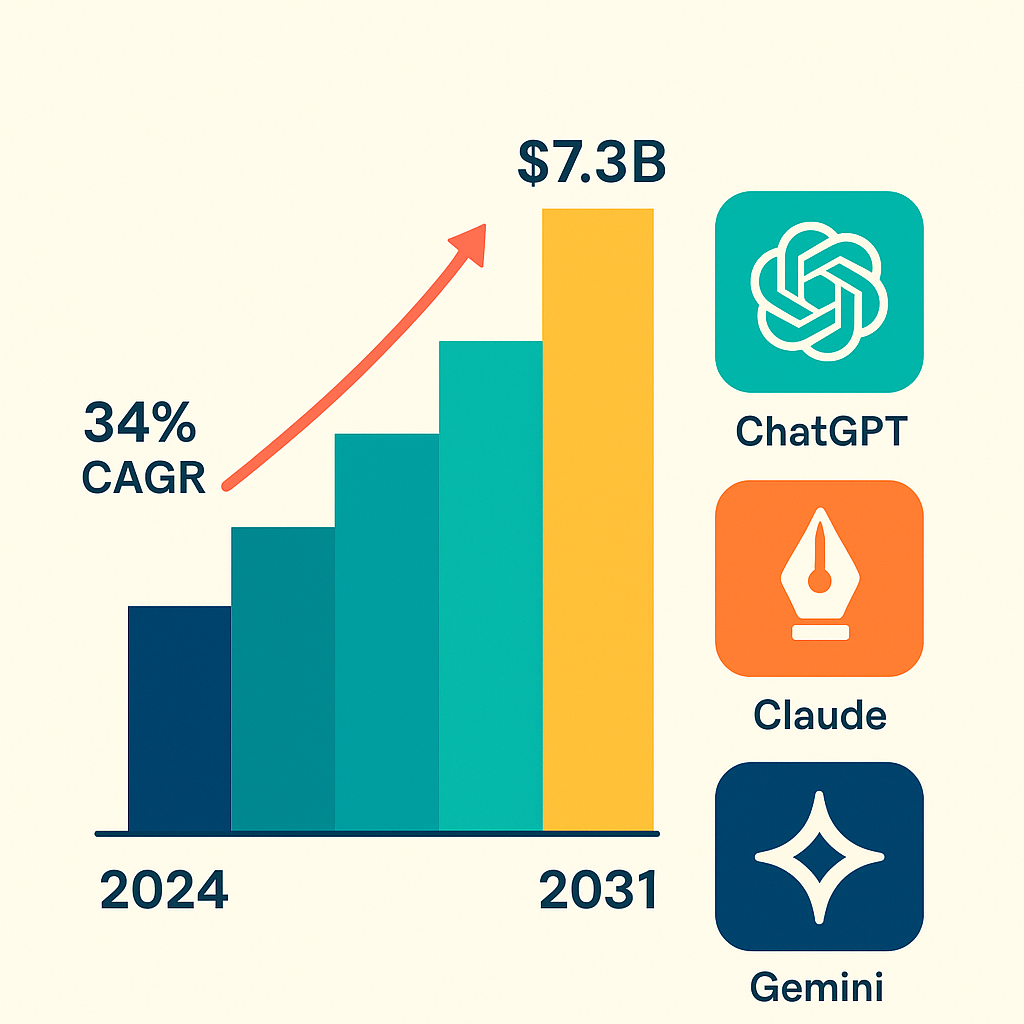
The market has validated this shift aggressively. According to Valuates Reports 2025, the global GEO market is projected to grow from $886 million in 2024 to $7.3 billion by 2031, at a 34% CAGR. That's not a rounding error — it signals a structural reallocation of marketing investment toward AI search visibility. Understanding what profound generative engine optimization actually requires, mechanically and strategically, is the first step to capturing that share before your competitors do.
Thesis: Generative engine optimization isn't a buzzword layer on top of SEO — it's a parallel visibility channel with its own signals, citation logic, and compounding returns. Brands that understand both will own search in 2026 and beyond.
What Generative Engine Optimization Actually Is
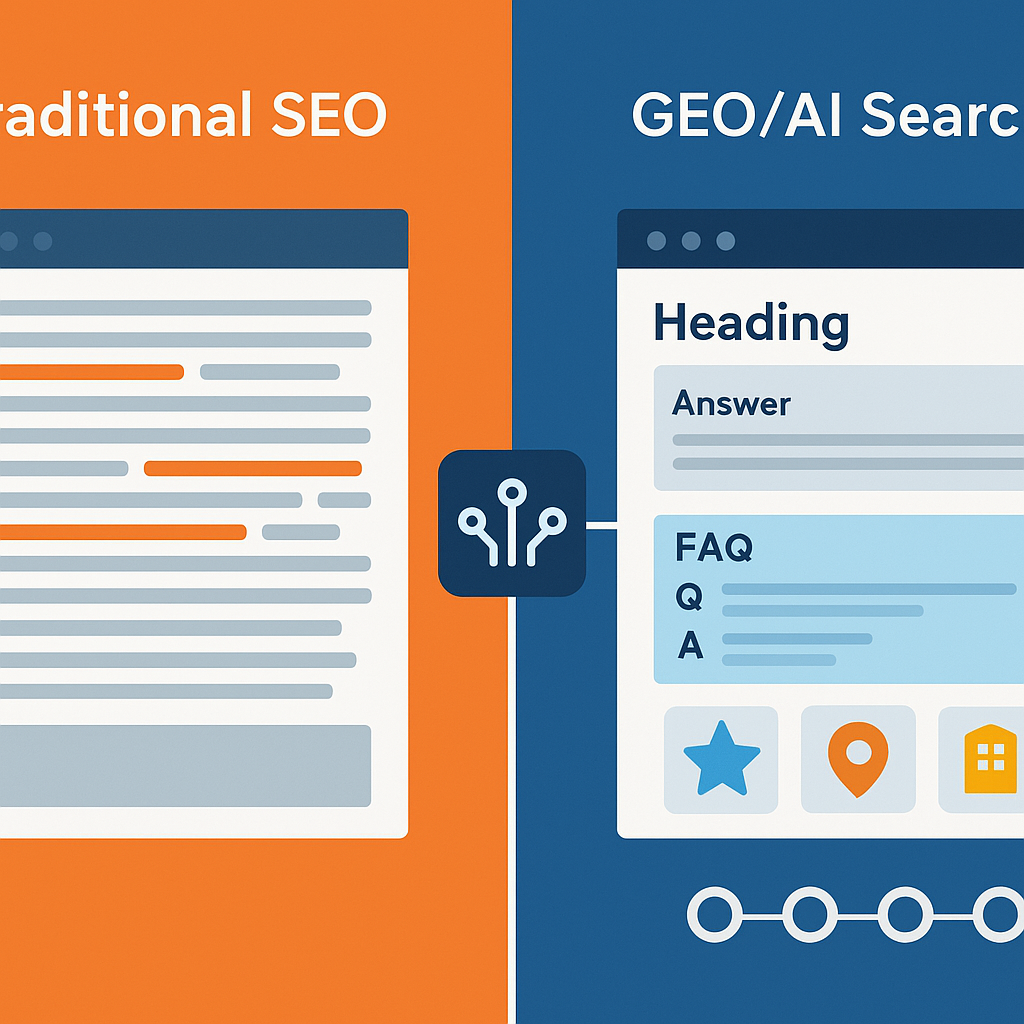
Generative engine optimization is the practice of structuring, framing, and distributing content so that AI language models — ChatGPT, Perplexity, Claude, Gemini — surface your brand as a cited source when generating answers to queries in your category. Where SEO optimizes for algorithmic ranking signals like backlinks, domain authority, and keyword co-occurrence, GEO optimizes for retrieval and synthesis relevance: can an AI model extract a clear, authoritative answer from your content and attribute it to your brand? The content requirements differ meaningfully. A page optimized for traditional ranking might rank well with dense prose and keyword saturation. A page optimized for AI citation needs clearly delineated facts, structured headers, FAQ blocks, and entity-level specificity that a language model can parse, extract, and attribute without ambiguity. GEO isn't about gaming a new algorithm — it's about writing in a way that is genuinely more useful to a machine that needs to synthesize an answer fast, and then tracking whether that synthesis happens.
How AI Engines Decide What to Cite
AI search engines don't rank pages in the same way Google does. Instead, they run a retrieval-augmented generation (RAG) loop: query comes in, the model retrieves candidate passages from indexed or crawled sources, then synthesizes a response and decides which passages to cite. The citation decision is driven by a combination of semantic relevance (does this passage answer the query?), factual confidence (is this claim consistent across multiple indexed sources?), and source authority (is this domain known to produce reliable content in this category?). For B2B SaaS brands, this means that being cited in an AI answer isn't random. It correlates heavily with topical depth, content structure, and consistent entity presence across the web. Brands that publish shallow, one-off articles rarely earn citations. Brands that publish systematically — covering sub-topics, answering adjacent questions, and maintaining structured content architecture — build what's effectively an AI citation gravity over time.
Retrieval is probabilistic. AI engines don't guarantee any source a citation. They pull from whichever passages most cleanly answer the query at inference time. This means GEO is partly a volume game: more well-structured, topically relevant content means more surfaces where your brand can be the best-fit citation.
Consistency beats freshness. Unlike Google's freshness signals, AI citation models favor sources that appear across many topically related queries, not just the newest content. Publishing 30 tightly themed articles that cover a topic cluster creates more citation gravity than publishing one viral piece.
Platform behavior varies. According to First Page Sage 2025, ChatGPT leads AI search with 59.7% share, followed by Microsoft Copilot at 14.4% and Google Gemini at 13.5%, based on analysis of 485,000+ citations. Optimizing for one platform doesn't guarantee presence on others — which is why cross-platform visibility tracking is a core GEO discipline, not an afterthought.
The Signal Set: What GEO Optimizes For
GEO doesn't abandon every traditional SEO signal — it layers a new set of signals on top. The core SEO fundamentals still matter: a technically crawlable site, legitimate inbound links, and content that satisfies user intent. But GEO adds a second layer of signals specifically oriented toward how language models retrieve and evaluate content. Understanding both layers is what separates surface-level GEO (adding FAQ sections to existing pages) from profound generative engine optimization (systematically engineering content architecture for AI citability across an entire domain). The signals cluster into two main categories.
Entity Authority vs. Keyword Relevance
Traditional SEO keyword relevance is about matching query terms. GEO entity authority is about being recognized, across many sources, as the authoritative brand or resource for a concept. For a B2B SaaS company, this means being consistently mentioned in context with specific software categories, use cases, and outcomes — not just ranking for a keyword on a single page. Entity authority builds through a combination of topical cluster depth (covering a subject area thoroughly, not just one angle), mentions and citations from external sources (both for SEO link equity and for AI training data), and schema markup that helps AI systems understand what your brand is and what it does. Google's documentation on structured data makes clear that schema is a primary signal for both traditional and AI-augmented search. The implication for GEO: schema markup isn't optional decoration — it's a direct input to the citation model.
Answer Density and Structural Completeness
AI engines favor content that answers questions with precision inside a defined block of text — not buried in a 3,000-word article where the answer appears in paragraph 14. Answer density is the degree to which content surfaces direct, extractable answers near the question or heading that frames them. Structurally, this means: H2 and H3 headings phrased as the question the paragraph answers, concise 150-180 word answer paragraphs that follow each heading directly, FAQ sections with individual question-as-subheading and answer-as-paragraph format (not list format, which AI crawlers parse with less attribution fidelity), and statistical claims attributed to named sources. These aren't arbitrary stylistic choices — they map directly to how RAG pipelines extract candidate passages before synthesis. Ahrefs research on content quality signals reinforces that clear, self-contained passages consistently outperform dense prose in AI retrieval contexts.
GEO vs. Traditional SEO: The Mechanical Difference
The clearest way to understand why GEO demands a separate discipline is to look at what happens at the moment of retrieval. In traditional Google search, a user sees a list of links and chooses which to click. Your content competes to be in that list. In AI search, the user sees a synthesized answer. The AI has already read, evaluated, and summarized multiple sources — and your content either contributed to that answer (and gets cited) or didn't (and is invisible). According to Relixir data cited in industry research, when AI-generated answers are displayed, CTRs for informational queries drop from 1.41% to 0.64% — more than half. That's a direct measurement of how AI answers are displacing click traffic from ranked pages. The brands absorbing that displacement are the ones being cited inside the AI answer itself.
- Traditional SEO: compete for a ranked position in a list of links
- GEO: compete to be the cited source inside a synthesized answer
- Traditional SEO: optimized for crawl, index, and ranking algorithm
- GEO: optimized for retrieval, extraction, and synthesis relevance
- Traditional SEO: success metric is keyword ranking position and organic CTR
- GEO: success metric is brand citation rate across AI platforms and AI share of voice
- Traditional SEO and GEO: both require authoritative content, backlinks, and technical site health — GEO adds structured answer architecture on top
The click-era tradeoff is real: when you're cited inside an AI answer, Relixir studies show brands see a 38% lift in organic clicks and a 39% increase in paid ad clicks. Being cited isn't just a vanity metric — it's a conversion driver.
The Profound AI Platform: What It Does in This Space
Profound (tryprofound.com) is a New York-based platform purpose-built for AI search visibility — what they call 'answer engine optimization.' Their core value proposition is tracking prompt volumes across AI search engines, providing answer engine insights that show where a brand currently appears in AI-generated responses, and offering read/write optimization tools that help marketing teams adjust content to earn more citations. For agencies managing client AI visibility, Profound's platform offers agent analytics and the ability to monitor AI search performance across multiple brands simultaneously. The platform's strength is in the monitoring and insight layer — it gives teams visibility into how their brand is being represented inside AI answers, which prompts are driving citations, and where gaps exist.
Profound's core differentiation lies in prompt-level tracking: the ability to see which specific queries are triggering AI answers that mention (or don't mention) your brand. For brands running ongoing GEO programs, this granularity is operationally useful — it surfaces exactly which content gaps to fill and which topics to reinforce. The platform is particularly well-suited for mid-to-large marketing teams that have content resources already and need an intelligence layer to direct those resources.
The workflow gap remains. Profound's insight layer is strong, but it doesn't autonomously generate and publish the content needed to close the visibility gaps it identifies. Teams still need to brief, write, optimize, and publish content separately — which is a material operational burden for small or content-lean B2B SaaS teams who need both the intelligence and the execution.
Gofylo's Approach: Autonomous GEO at Scale
Where Profound (and similar tools like the AI Search Grader category more broadly) focuses on visibility intelligence, Gofylo is built around the full content lifecycle — from keyword research through publication and AI citation tracking — without requiring a content team to operate it. The structural difference matters: Gofylo handles keyword research, article writing, CMS publishing, and AI visibility tracking as a closed loop. Content is generated in under 4 minutes per article, published directly to connected CMS platforms (WordPress, Webflow, Shopify, Framer, Ghost, and others), and includes schema markup, internal linking, FAQ blocks, and AI-generated images by default. Gofylo's AI Visibility Score reflects how ChatGPT and Claude respond when asked about a brand.
- Gofylo publishes up to 30 articles a month per customer to their CMS.
- 30 articles per month on the standard plan at $79/month
- End-to-end generation in under 4 minutes per article
- Content published in 18+ languages for international GEO coverage
- Integrated AI Visibility Score based on how ChatGPT and Claude see your brand
- Schema markup, FAQ blocks, and internal linking included by default — the structural signals GEO demands
- No content team required — agents operate autonomously across the full research-to-publish cycle
The operational insight: profound generative engine optimization requires both the intelligence to know where you're invisible and the execution capacity to close those gaps at scale. Gofylo combines both — the visibility tracking and the autonomous content engine that acts on it — in a single $79/month plan with a 3-day free trial.
Why AI-Cited Content Compounds Differently Than Ranked Content
The compounding dynamic of AI-cited content is mechanically distinct from how SEO content compounds. In traditional SEO, compounding happens when content earns backlinks over time, which improves domain authority, which lifts future content. In GEO, compounding works through entity reinforcement: every piece of content that earns a citation in an AI answer increases the model's confidence that your brand is authoritative on that topic, making future citations more likely. This is why publishing cadence matters at a structural level — not just for freshness signals, but because each piece of GEO-optimized content strengthens the probabilistic weight the model assigns to your domain when synthesizing answers in your category. The data supports this urgency. According to Search Engine Journal 2025, 172,000+ keywords now trigger Google AI Overviews, up from just 10,000 in August 2024 — a 1,620% increase in under a year. And according to Harvard Business Review 2025, 58% of consumers now rely on AI for product recommendations, more than double the rate from two years prior. The surface area for AI citation is expanding faster than most marketing teams are publishing into it.
Fortune 500 CMOs agree. According to market research published in Q4 2025, 67% of Fortune 500 CMOs identified GEO as a top-three digital priority for fiscal 2026, up from just 18% in 2024. The delta between those who invested early and those who waited is already visible in AI citation share of voice metrics.
Zero-click isn't zero-value. The concern about AI answers reducing click traffic is real but incomplete. Relixir studies show that when brands are cited inside AI-generated answers, they see a 38% lift in organic clicks and a 39% increase in paid ad clicks. Being present in the AI answer — even when users don't click through immediately — builds brand recognition that converts across other channels.
The window is narrowing. According to the Wall Street Journal, approximately 5.6% of all U.S. searches in mid-2025 were conducted using AI-powered LLMs as the primary search tool. That share is growing. The brands building citation authority now are establishing compounding positions that will be exponentially more expensive to displace later — structurally similar to domain authority in SEO, but developing faster.
Frequently Asked Questions
How much does Profound AI cost per month?
Profound AI's pricing is not publicly listed on a standard pricing page and is typically quoted based on brand and agency tier, with plans reported to range from several hundred to several thousand dollars per month depending on prompt volume tracking and the number of brands monitored. For B2B SaaS teams evaluating AI visibility platforms at a lower operational cost, Gofylo's plan — which includes content generation and an AI visibility score — is priced at $79/month with a 3-day free trial.
What does generative engine optimization mean?
Generative engine optimization (GEO) is the discipline of structuring and distributing content so that AI search engines — like ChatGPT, Perplexity, Claude, and Gemini — surface your brand as a cited source when synthesizing answers to queries in your category. It differs from traditional SEO in that it optimizes for AI retrieval and citation logic rather than for algorithmic ranking signals like keyword density and backlink authority.
Who is the CEO of Profound AI?
Profound AI (tryprofound.com) was co-founded by Isaac Babbs and Ilya Fushman, with Isaac Babbs serving as CEO. The company is headquartered in New York and focuses on AI search visibility and answer engine optimization for brands and marketing agencies.
Is generative engine optimization a real thing?
Yes — generative engine optimization is a validated and rapidly growing discipline, not a marketing buzzword. The global GEO market is projected to grow from $886 million in 2024 to $7.3 billion by 2031 at a 34% CAGR, according to Valuates Reports 2025. The discipline addresses a structural shift in how AI search engines synthesize and cite content, with measurable outcomes: brands cited in AI answers see documented lifts in both organic and paid click performance, according to Relixir research.
Ready to see where your brand actually stands in AI search? Gofylo's free AI Search Grader gives you a visibility score from ChatGPT and Claude — no sales call. Start your 3-day free trial at Gofylo and let autonomous agents begin building your GEO citation authority from day one.