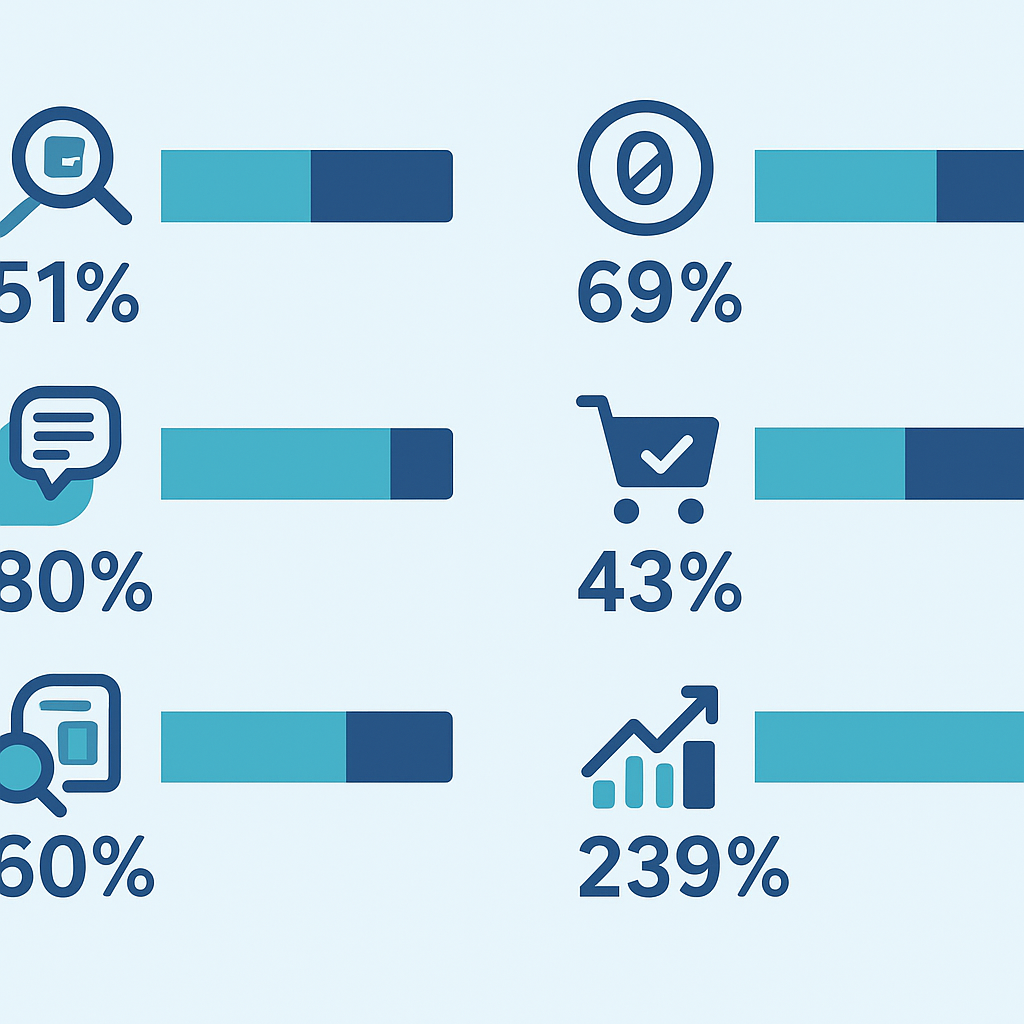
As of 2026, the search landscape has bifurcated in a way that makes a single-channel SEO strategy structurally insufficient. Google's AI Overviews now appear in 51% of SERPs, up from just 25% in August 2024 — and that's before you account for ChatGPT, Perplexity, Claude, and Gemini pulling branded and product-level queries away from blue-link results entirely. If your content isn't structured to be cited by these systems, you're invisible to a fast-growing segment of buyers at the exact moment they're forming purchase decisions.
The category of answer engine optimization tools has expanded rapidly to address this — but the tools vary enormously in what they actually do. Some track AI citations. Some optimize schema. Some do competitive monitoring. Very few handle both traditional SEO signals and AI search visibility in a single workflow. This resource breaks down the 10 most relevant tools on the market, what each one actually does well, and where the gaps are — so you can assemble or choose a stack that compounds, not one that just reports.
The core thesis: the best answer engine optimization tool in 2026 isn't the one with the most dashboards — it's the one that closes the loop between content creation, AI citation tracking, and autonomous publishing without requiring a full content team to operate it.
What Makes an AEO Tool Worth Using in 2026?
Before diving into individual tools, it's worth establishing what separates a useful answer engine optimization tool from a glorified keyword tracker with a new label. The category is genuinely new — most SEO tools have bolted on 'AI visibility' dashboards without rebuilding the underlying data model. That matters because tracking whether ChatGPT mentions your brand requires querying large language models directly, not scraping a SERP. The two are architecturally different, and tools that don't make that distinction tend to surface shallow data.
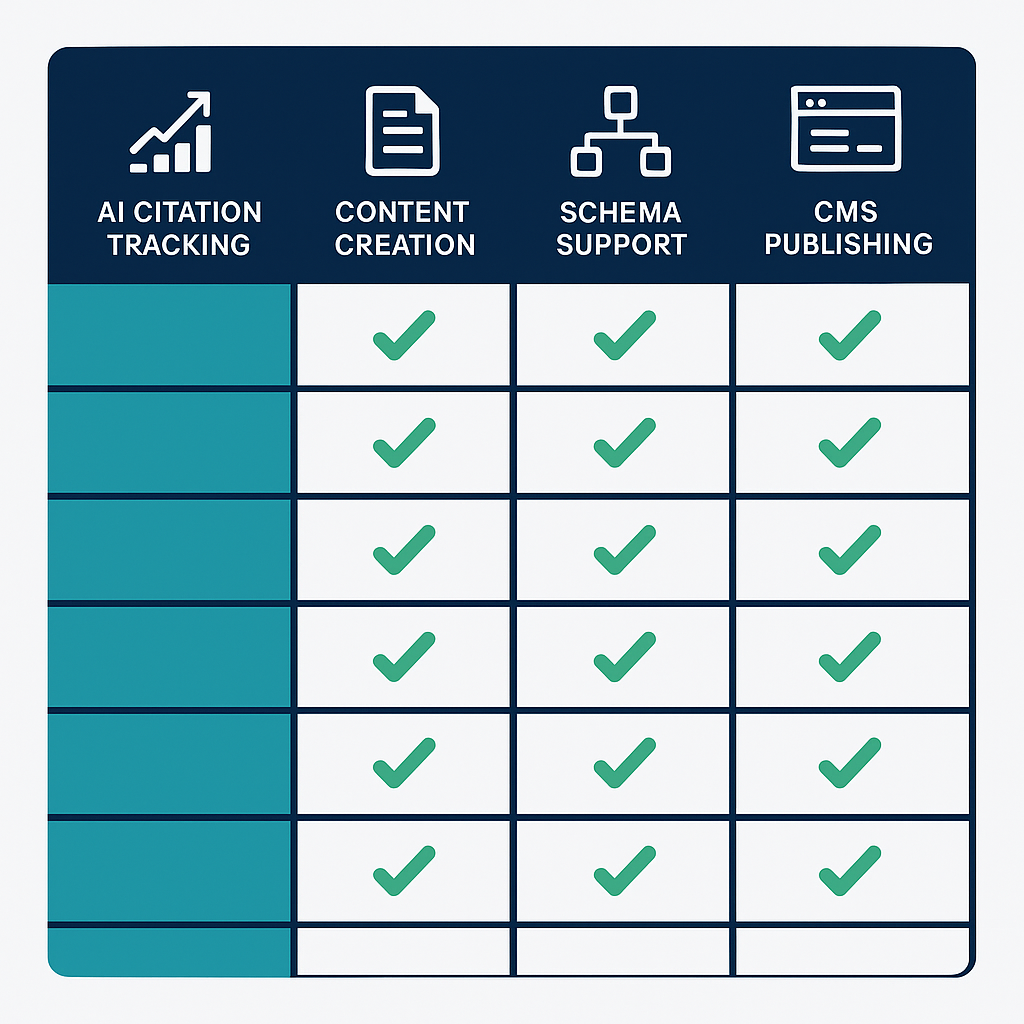
AI citation tracking The tool must actually query ChatGPT, Claude, Perplexity, and Gemini with prompts relevant to your category and detect whether your brand, product, or content appears in the response. Frequency, position, and sentiment within the citation all matter for share-of-voice analysis.
Schema and structured data support Google's AI Overviews and most LLM answer engines heavily weight content with proper FAQ schema, HowTo schema, and structured data. A tool that audits, generates, or validates schema is doing meaningful AEO work. One that doesn't touch structured data is leaving the most actionable lever unused.
Content-to-citation loop The most durable AEO advantage comes from content that is structured to be cited — not just tracked after the fact. Tools that help you create E-E-A-T-compliant, question-answering content (or do it autonomously) compound faster than pure monitoring tools because they address the root cause, not just the symptom.
Integration depth A tool that generates insights but requires manual copy-paste into a CMS is a half-solution. Look for direct integrations with WordPress, Webflow, Shopify, or your CMS of choice — ideally with auto-publish capabilities so the loop between insight and execution doesn't require a human handoff every time.
According to CXL's 2026 AEO guide, the percentage of zero-click Google searches jumped from 56% in 2024 to 69% in 2025 — meaning more than two-thirds of searches now resolve without a click to any website. For B2B SaaS teams, the implication is direct: if you're not being cited in the answer itself, you don't exist in that query. The right answer engine optimization tool helps you measure that gap and close it systematically.
The Full List: 10 AEO Tools at a Glance
- Gofylo — autonomous AEO content engine + AI visibility tracker with full CMS publishing
- AirOps — AI-powered content workflows with AEO optimization and brand monitoring
- AIclicks — AEO tracking and AI search visibility scoring with competitive benchmarking
- SE Ranking AI Visibility — SERP and AI Overview tracking integrated into a broader SEO suite
- Perplexity Business (Visibility Layer) — query analytics and brand presence data inside the Perplexity ecosystem
- Surfer AI Tracker — content optimization with AI Overview rank monitoring
- Ahrefs Brand Radar — AI mention tracking layered onto Ahrefs' existing authority and link data
1. Gofylo
Gofylo is the most structurally distinct tool on this list because it doesn't just track AEO performance — it autonomously generates and publishes the content that earns citations. Most answer engine optimization tools operate at the monitoring layer: they tell you where your brand appears (or doesn't) in ChatGPT, Claude, Perplexity, and Gemini responses. Gofylo closes the loop by operating at the production layer as well. Gofylo handles keyword research, article writing, CMS publishing, and AI visibility tracking. Each article is written in a few minutes, and the standard plan publishes 30 a month to a customer's CMS.
The AI visibility score is generated by querying ChatGPT and Claude about your brand, giving you a benchmark for how those two engines see you. Articles are generated with FAQ schema blocks, HowTo markup, internal linking, and structured data baked in at the point of creation, which is why the citation rates compound rather than plateau. Content is available in 18+ languages. The platform integrates natively with WordPress, WordPress.com, Webflow, Shopify, Wix, Notion, Ghost, Framer, and Feather, plus API webhooks for custom setups. At $79/month with a 3-day free trial, it handles autonomous content production and publishes articles formatted to be cited by AI assistants such as ChatGPT, Claude, Perplexity, and Gemini, all in a single subscription. For solo operators, bootstrapped founders, or B2B SaaS teams without a dedicated content function, that structural difference matters more than any individual feature comparison.
- Pros: Full content lifecycle automation; multi-LLM citation tracking; schema baked into every article; 18+ language support; $79/month all-in
- Pros: AI Visibility Score from ChatGPT and Claude; 30 articles/month on standard plan; direct CMS publishing eliminates manual handoff
- Pros: Competitor keyword research from rivals and live search results included; free AI Search Grader as a standalone entry point
- Cons: Not a standalone audit tool — designed for ongoing content programs, not one-time site audits
- Cons: Article publishing requires CMS integration setup
- Best for: B2B SaaS teams, growth-stage startups, and solo operators who want to compound AEO performance without a content team
2. AirOps
AirOps is a content workflow platform that has built a meaningful AEO optimization layer on top of its core AI writing capabilities. Where Gofylo automates the full loop, AirOps positions itself as a more hands-on workflow tool — you define the templates, prompts, and processes, and AirOps executes them at scale. Its AEO-specific features include AI Overview tracking, brand mention monitoring across LLMs, and content gap analysis that surfaces question clusters your pages aren't currently answering. The brand monitoring layer queries multiple AI engines and returns share-of-voice data, which is genuinely useful for competitive analysis. AirOps works well for mid-market content teams that want to build custom AI workflows — it's more flexible than Gofylo but requires more configuration and ongoing human oversight. Pricing is tiered and scales with usage volume, which makes it a reasonable fit for agencies running AEO programs across multiple clients.
- Pros: Highly configurable workflow templates; solid AI mention tracking across ChatGPT and Perplexity; good for agencies managing multiple brands
- Pros: Content gap analysis tied to question-intent keywords; integrates with popular CMS platforms
- Cons: Requires meaningful setup and prompt engineering expertise to get full value
- Cons: Not fully autonomous — human oversight needed for content quality control
- Best for: Content teams that want AI-assisted workflows with AEO tracking, not fully autonomous publishing
3. AIclicks
AIclicks is one of the most focused pure-play answer engine optimization tracking tools in this list. It's built primarily for monitoring AI search visibility — tracking how your brand and competitors appear across ChatGPT, Perplexity, Gemini, and Bing Copilot responses for a defined set of queries. The interface is clean, the onboarding is fast, and the competitive benchmarking reports are among the more useful outputs in the category. AIclicks doesn't generate or publish content, so it's best paired with a separate content production workflow. It does surface actionable recommendations — which questions to answer, which schema gaps to close — but execution is left to your team. For marketers who want a lightweight, low-cost way to get visibility data without committing to a full platform, AIclicks is one of the more accessible entry points to the category.
- Pros: Fast onboarding; strong competitive benchmarking; tracks Bing Copilot in addition to ChatGPT, Perplexity, and Gemini
- Pros: Clean UX; query-level citation data with response excerpts
- Cons: No content creation or publishing capabilities
- Cons: Recommendation quality depends on your team's ability to execute against findings
- Best for: Marketing leads who want AI visibility dashboards and competitive monitoring without a full platform
4. SE Ranking AI Visibility
SE Ranking is a well-established SEO suite that added an AI Visibility module as AI Overviews became a dominant SERP feature. The AI Visibility layer tracks whether your content appears in Google's AI Overviews — a meaningful signal given that Google's AI Overviews now appear in 51% of SERPs as of mid-2025. SE Ranking's strength is integration: you get traditional rank tracking, backlink analysis, site audit, and AI Overview monitoring under one roof, which reduces dashboard fragmentation. The limitation is scope — SE Ranking's AI visibility tracking is heavily weighted toward Google's ecosystem and doesn't yet provide deep monitoring of ChatGPT, Claude, or Perplexity citation data with the same granularity as purpose-built AEO tools. For teams that are already in the SE Ranking ecosystem and want to add AI Overview tracking without switching platforms, it's a logical extension. For teams that need full multi-LLM coverage, it's a partial solution.
- Pros: All-in-one SEO + AI Overview tracking; strong SERP monitoring for Google-native AI features; no additional platform needed
- Pros: Good historical data and trend visualization; solid site audit capabilities
- Cons: LLM-specific tracking (ChatGPT, Claude, Perplexity) is limited compared to purpose-built AEO tools
- Cons: AI visibility module feels bolted on rather than native to the platform's core
- Best for: SEO teams already using SE Ranking who want to extend into AI Overview tracking without switching tools
5. Perplexity Business (Visibility Layer)
Perplexity's enterprise and business tiers include query analytics that give brands insight into how their content is being surfaced within Perplexity's answer engine. This is a first-party data source that no third-party tool can fully replicate — you're seeing actual query patterns, source citation frequency, and content performance directly from the platform that processed 780 million queries in May 2025, up 239% from mid-2024. The limitation is obvious: it's Perplexity-specific. You won't get ChatGPT, Claude, or Gemini data through this channel. It's also an enterprise product with pricing that reflects that positioning. For brands where Perplexity is a high-priority channel — typically technical audiences, researchers, and B2B buyers — the first-party analytics are genuinely valuable. Most teams will use this alongside a broader AEO tracking tool rather than as a standalone answer engine optimization tool.
- Pros: First-party Perplexity citation data; query analytics unavailable in third-party tools; real-time performance signals
- Pros: Strong signal quality for technical and B2B audiences who index heavily on Perplexity
- Cons: Single-platform scope; enterprise pricing; no content creation or multi-LLM tracking
- Best for: Enterprise teams where Perplexity is a priority channel and first-party analytics justify the cost
6. Surfer AI Tracker
Surfer built its reputation on content scoring and NLP-based on-page optimization, and its AI Tracker module extends that into AI Overview monitoring. The tool tracks which of your URLs appear in Google's AI Overviews, surfaces the queries triggering those appearances, and shows content score trends over time. For teams already using Surfer for content optimization, the AI Tracker is a logical add-on. It's Google-centric, like SE Ranking's AI module, and doesn't cover ChatGPT, Claude, or Perplexity with dedicated tracking. The content editor remains Surfer's strongest asset — for teams that want to optimize existing content for AI citation potential, the real-time scoring model is one of the more actionable interfaces available. The gap is in the production-to-publication workflow: Surfer tells you how to optimize, but publishing still requires a human in the loop.
- Pros: Strong content scoring for AI Overview optimization; NLP-based recommendations grounded in SERP analysis; good Surfer ecosystem integration
- Pros: Tracks URL-level AI Overview appearance; trend data for measuring content improvement impact
- Cons: Limited to Google AI Overviews; no ChatGPT, Claude, or Perplexity coverage
- Cons: Publishing workflow requires human execution; not autonomous
- Best for: Content teams optimizing existing pages for Google AI Overviews who are already in the Surfer ecosystem
7. Ahrefs Brand Radar
Ahrefs Brand Radar is Ahrefs' answer to AI citation monitoring — a feature within the Ahrefs suite that tracks brand mentions across AI-generated answers, primarily on platforms like ChatGPT and Perplexity. For teams already using Ahrefs for backlink analysis, keyword research, and site audit, Brand Radar adds an AI visibility layer without requiring a separate tool. The feature set is narrower than dedicated AEO trackers, but the integration with Ahrefs' core authority and link data creates useful context: you can see which of your high-authority pages are being cited in AI responses and correlate that with link profiles. Ahrefs' backlink data remains one of the strongest signals for understanding why certain content gets cited by LLMs — domain authority and referring domain counts still correlate with AI citation frequency. Brand Radar is a solid addition for Ahrefs users but isn't a comprehensive standalone answer engine optimization tool.
- Pros: Native integration with Ahrefs' authority and backlink data; no additional platform needed for existing Ahrefs users
- Pros: Correlates AI citation data with link profile insights; strong brand mention detection
- Cons: Narrower AEO feature set compared to dedicated platforms; limited schema or content creation capabilities
- Cons: Value depends heavily on already being in the Ahrefs ecosystem
- Best for: SEO teams using Ahrefs as their primary platform who want to add basic AI citation monitoring
8. Profound
Profound is a purpose-built AI search analytics platform focused on share-of-voice measurement across multiple LLMs. It's one of the more sophisticated pure-play monitoring tools in the answer engine optimization tool category — it queries ChatGPT, Claude, Perplexity, and Gemini at scale, tracks citation frequency and context, and produces competitive share-of-voice reports that are genuinely useful for strategic positioning. The platform's strength is analytical depth: you can slice citation data by query category, competitor, and engine, which makes it useful for demand gen teams and brand strategists building category narratives. The gap, as with most monitoring-focused tools, is the absence of a content creation or publishing layer. Profound tells you what's being cited and by whom — it doesn't help you produce the content that earns those citations. For enterprise teams with separate content functions, that's fine. For leaner teams, pairing Profound with an autonomous content platform like Gofylo gives you both the intelligence and the execution.
- Pros: Deep multi-LLM share-of-voice analytics; competitive benchmarking across ChatGPT, Claude, Perplexity, Gemini; strong for brand strategy and category narrative building
- Pros: Query categorization and citation context data; useful for demand gen teams and CMOs
- Cons: No content creation, schema generation, or publishing capabilities
- Cons: Enterprise-oriented pricing; steeper learning curve than lighter tracking tools
- Best for: Enterprise marketing and brand teams that need sophisticated AI share-of-voice data and have separate content execution resources
A pattern worth noting: the tools with the deepest AEO analytics (Profound, Perplexity Business) lack content execution. The tools with the strongest content execution (Gofylo) close the loop with tracking. The rest sit in the middle. Your tool choice should reflect where your team's actual bottleneck is — insight generation or content production.
9. Gauge
Gauge is a lightweight AI visibility scoring tool that focuses on natural language query monitoring across AI engines. It's positioned toward smaller teams and solo operators who want actionable AEO data without enterprise-level overhead. The tool monitors how your brand and key topics perform in AI-generated answers, scores your visibility relative to competitors, and surfaces quick-win recommendations around content structure and schema. The interface is minimal by design — Gauge doesn't try to be a full SEO platform, which makes it fast to set up and easy to interpret. The trade-off is depth: Gauge's data model is less granular than Profound or AIclicks, and the content recommendations lean toward general best practices rather than query-specific gap analysis. For bootstrapped founders or solo operators who want a fast answer to 'am I being cited in AI search?', Gauge is one of the more accessible answer engine optimization tool options available.
- Pros: Fast setup; lightweight and accessible for small teams; actionable schema recommendations
- Pros: Competitive visibility scoring; clean reporting for founders who don't need deep analytics
- Cons: Less granular than dedicated AEO platforms; limited query-level citation data
- Cons: General recommendations may not address specific content gaps
- Best for: Solo operators and bootstrapped founders who want basic AI visibility data without platform complexity
10. Qwairy
Qwairy focuses on structured AEO auditing — it evaluates your existing content against a set of answer engine optimization criteria, validates schema markup, and surfaces structural gaps that reduce your citation probability in AI search. The platform is particularly strong on technical AEO: it checks FAQ schema implementation, HowTo markup, speakable schema, and content clarity against question-intent queries. Where most monitoring tools tell you whether you're being cited, Qwairy tells you why you're not — making it a diagnostic tool rather than a tracking tool. The absence of publishing or autonomous content generation means Qwairy outputs are only as valuable as your team's capacity to execute on them. For content and SEO managers running technical audits on large content libraries, Qwairy's structured reporting is detailed and actionable. For teams that need both the diagnosis and the fix, pairing it with a content production platform is necessary.
- Pros: Deep technical AEO auditing; strong schema validation including FAQ, HowTo, and speakable markup; diagnostic-first approach
- Pros: Identifies structural reasons for low AI citation rates; useful for content library audits
- Cons: No content creation, publishing, or live monitoring capabilities
- Cons: Audit outputs require separate execution resources
- Best for: SEO managers auditing large content libraries for AEO compliance and schema gaps
How to Choose the Right Tool for Your Stack
The answer engine optimization tool category has matured enough that tool selection should be driven by your team's specific bottleneck, not by feature count. According to HubSpot's Consumer Trends Report, 72% of consumers plan to use AI for shopping more frequently — meaning AEO isn't a future-proofing exercise, it's a current-quarter priority. But investing in a monitoring platform when your content library is thin, or investing in a content engine when your schema is broken, means optimizing the wrong variable first. The diagnostic questions below separate the two most common team archetypes.
What to Look for If You're a Small Team or Solo Operator
If you're a founder running marketing solo, a bootstrapped product builder, or a one-person content function at an early-stage SaaS company, your constraint is time and headcount — not budget for enterprise analytics. The tools that make the most structural difference for you are the ones that reduce human labor in the content production loop. That means prioritizing platforms that generate, optimize, and publish content autonomously, with AI visibility tracking built in, rather than assembling a stack of three or four monitoring tools that require someone to action the insights manually. Almost 60% of people now use AI to research products before buying — the buyers you want to reach are already in these AI systems, and every week without AI-cited content is a week of invisible brand presence.
For this archetype, the most defensible choice is a platform that handles the full lifecycle: keyword research, writing, schema injection, publishing, and citation tracking. Gofylo's 30-article-per-month engine at $79/month, with a free AI Search Grader to benchmark your current AI visibility before committing, is specifically designed for this constraint. Gauge or Qwairy work as lightweight diagnostics if you want to understand your existing content's AEO gaps before investing in production at scale. The free tier of AIclicks also gives a reasonable competitive snapshot without financial commitment — a useful starting point if you want to understand the competitive landscape on specific queries before building a content response.
What to Look for If You're a Growth-Stage SaaS Company
At the growth-stage SaaS level, you likely have a content function — but it's lean relative to the content volume needed to compound in both traditional search and AI search simultaneously. The structural challenge is that AI search requires a different optimization pattern than traditional SEO: question-intent content, explicit entity definitions, FAQ schema, and direct answer formatting are weighted more heavily by LLMs than by Google's traditional ranking algorithm. Most existing content libraries were built for keyword density and backlink acquisition, not for citation by language models. According to Google's AI search documentation, content structured with clear, direct answers and proper schema markup is significantly more likely to appear in AI-generated summaries — meaning a retroactive audit of your existing library combined with a forward-looking autonomous content program covers both the legacy gap and the ongoing compounding requirement.
For this archetype, the most effective stack combines an autonomous content platform (Gofylo) for ongoing production with a dedicated multi-LLM tracker (Profound or AIclicks) for competitive share-of-voice data, plus existing SEO tools (Ahrefs or SE Ranking) for traditional signal monitoring. According to Semrush's research on AI search visibility, brands that build structured, E-E-A-T-compliant content libraries see compounding AI citation rates over time — the mechanism is consistent entity reinforcement across multiple pieces, not a single well-optimized page. That's why volume and schema consistency matter more than any individual article's optimization score. An autonomous platform that ships 30 structured articles per month, each with FAQ schema and internal linking, compounds faster than a team shipping 4 manually optimized pieces.
The compounding mechanism in AEO isn't a mystery: LLMs cite sources they've indexed frequently, across multiple topically related documents, with consistent entity references. That's an argument for content volume and structural consistency — not just for any single 'perfectly optimized' page. Tools that produce one piece well don't compound. Systems that produce 30 structured pieces per month do.
Frequently Asked Questions
What is an answer engine optimization tool?
An answer engine optimization tool is software designed to help brands appear in AI-generated responses from platforms like ChatGPT, Claude, Perplexity, and Gemini — as opposed to traditional SEO tools focused on Google's blue-link search results. These tools typically track brand citations in AI answers, optimize content structure and schema for AI citation probability, and surface competitive share-of-voice data across multiple LLMs. The category spans monitoring-only tools, content optimization tools, and full-lifecycle platforms that handle both production and tracking.
How is AEO different from traditional SEO?
Traditional SEO optimizes for ranking position in search engine result pages — the goal is a high-ranking blue link that earns clicks. AEO (answer engine optimization) optimizes for being cited within AI-generated answers, where there are no ranked links, only synthesized responses that cite sources inline or in reference panels. The technical signals differ: AEO prioritizes question-intent content, FAQ schema, direct answer formatting, and entity clarity, while traditional SEO weights keyword density, backlink authority, and technical crawlability more heavily. Importantly, AEO and SEO are complementary — high-authority, well-structured content tends to perform in both channels, but the optimization emphasis is different enough to require dedicated tooling and workflows for each. For a deeper breakdown of how these two strategies relate, the concepts explored in articles on GEO vs SEO and AEO vs GEO are worth reviewing alongside this resource list.
Are there free answer engine optimization tools?
Several tools in this category offer free tiers or standalone free tools. Gofylo's AI Search Grader is a free standalone tool that grades your brand's current AI search visibility and provides actionable scoring without requiring a subscription. AIclicks offers limited free access to its AI visibility tracking. For teams exploring the answer engine optimization tool category without a budget commitment, free graders and audit tools are a practical first step — they surface your current AI citation gaps before you invest in a production or monitoring platform.
How does answer engine optimization work in practice?
AEO works by structuring content so that AI language models can easily extract, summarize, and cite it when answering relevant queries. In practice, this means writing content that directly answers specific questions, implementing FAQ and HowTo schema markup, building topical authority across a cluster of related content pieces, and ensuring consistent entity references (brand name, product categories, key concepts) appear across your content library. AI systems are more likely to cite sources that appear authoritative across multiple related documents — so volume and structural consistency compound over time. The tracking layer — monitoring which queries your brand appears in across ChatGPT, Claude, Perplexity, and Gemini — tells you whether your optimization is working and surfaces gaps for the next content cycle.
Which AI search engines should I prioritize for AEO?
For most B2B SaaS brands, Perplexity and ChatGPT represent the highest-priority AEO channels in 2026, followed by Google's AI Overviews and Gemini. Perplexity processed 780 million queries in a single month in 2025 and skews toward technical and research-oriented audiences — a strong overlap with B2B buyers. ChatGPT's scale and general-purpose query volume make it critical for broad brand visibility. Google AI Overviews matter because of Google's overall search volume dominance. The best answer engine optimization tools track all four in parallel, because a buyer may start a research journey in one LLM and complete it in another — and your brand needs to be cited consistently across the full journey.
Is there an answer engine optimization certification available?
As of 2026, there is no single widely recognized answer engine optimization certification equivalent to Google's Analytics or Ads certifications. HubSpot Academy and a growing number of digital marketing education platforms have introduced AEO modules within broader SEO or AI marketing courses, but the category is new enough that certifications are still emerging rather than standardized. Practitioners looking to build AEO competency typically combine platform documentation (Gofylo, AirOps, AIclicks all publish guides), independent research from sources like CXL and Search Engine Land, and hands-on experimentation with multi-LLM tracking tools as the most practical path to expertise.
If you want to see where your brand stands in AI search right now — before investing in any of the tools above — Gofylo's free AI Search Grader gives you a visibility score based on how ChatGPT and Claude see your brand. No setup required. Then, if you want to close the gaps autonomously, the $79/month plan ships 30 structured, schema-ready articles per month and tracks your citation growth in real time. Start your 3-day free trial at gofylo.io.
Sources
- Future of SEO: Answer Engine Optimization Revealed | IDCM - myidcm.com
- Answer Engine Optimization AEO: The comprehensive guide for 2026 - cxl.com
- Top 10 Answer Engine Optimization AEO Tools in 2025 Ranked - nogood.io
- 39 Answer Engine Optimization Statistics Shaping B2B SaaS - yourcontentmart.co
- Answer engine optimization trends in 2026: How AEO is transforming the landscape - blog.hubspot.com