This list is for B2B SaaS founders, marketing leads, SEO managers and solo builders who already run some form of link acquisition and want to know which software deserves a seat in the stack. As of 2026, a backlink program has two audiences. Google's crawlers still use links to judge authority. AI assistants such as ChatGPT, Claude, Perplexity and Gemini also lean on well-linked, frequently referenced pages when they decide what to cite. The best backlinking tools help with both: they show you where authority sits, help you reach the people who control it, and help you publish pages worth linking to.
I chose these seven by the job each one does in a working 2026 link program: link data and competitor analysis, outreach and relationship tracking, contact discovery, and the content that gives you a reason to ask for a link in the first place. I weighted database size and freshness, prospect filtering, contact accuracy, workflow fit and price for a small team. Where a figure appears, it comes from a named, linked source. Gofylo is on the list because content production is part of link building, and it is my own product, so read that entry with that in mind.
The short version: most small SaaS teams need one link database, one outreach layer and a steady supply of linkable content. The table below maps each tool to that split.
| Tool | What it is for | Who it suits |
|---|---|---|
| Ahrefs | Backlink index, competitor link analysis, link intersect | SEO managers who live in link data |
| Semrush | All-in-one SEO suite with backlink analytics, gap analysis and outreach | Marketing teams wanting one platform for SEO and links |
| SE Ranking | Lower-cost backlink checker, monitoring and gap analysis | Bootstrapped founders and lean teams |
| Moz Pro | Link Explorer, Domain Authority and Spam Score metrics | Teams that report authority metrics to stakeholders |
| Pitchbox | Outreach automation with prospecting and follow-up sequences | Teams running outreach at volume |
| Hunter.io | Email finding and verification for outreach | Anyone pitching sites without a contact list |
| Gofylo (my product) | Autonomous production of linkable, AI-citable articles | Teams with no content writers who need assets to pitch |
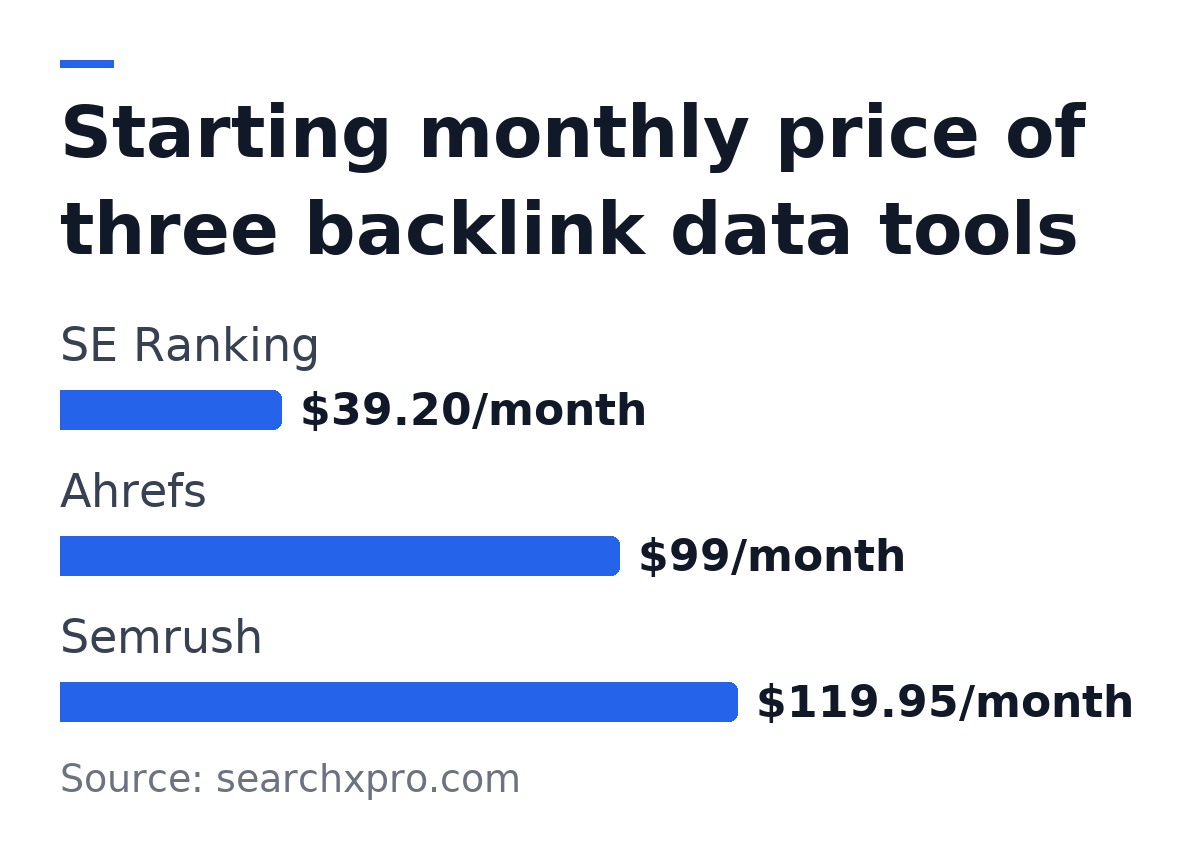
If you pick only one tool, start with Ahrefs. Every other step in link building depends on knowing who links to your competitors and why, and Ahrefs has the fastest-updating index of the tools here. If $99 a month is too much for your stage, SE Ranking covers the same core jobs for less.

Ahrefs
Ahrefs is a backlink index and SEO suite built around one question: who links to whom. Site Explorer shows every referring domain for any URL you enter, with anchor text, first-seen and lost dates, and the traffic each linking page receives. Link Intersect shows domains that link to two or three competitors but not to you, which is the fastest shortlist of warm prospects you can build. Content Explorer surfaces pages in your niche that have earned many referring domains, so you can see which formats attract links before you write anything.
Freshness is where Ahrefs separates itself. According to Linkbuilder's backlink checker review, "Every 24 hours the crawler visits more than 6 billion web pages. It also updates Ahrefs' index every 15–30 minutes." In practice that means a link a partner placed this morning often shows up the same day, and a lost link gets flagged before you have forgotten the relationship. On size, Exploding Topics' comparison of Ahrefs, Semrush and Moz lists the Ahrefs backlinks database at 35 trillion links alongside 28.7 billion keywords.
Price is the main trade-off. SearchXPro's monitoring tool roundup lists Ahrefs as starting at $99/month, and the entry tier limits how many reports and projects you can run. For a solo founder that is a real cost. For an SEO manager who uses link data daily, it pays back the first time Link Intersect turns up a list of industry blogs that already link to three competitors.
- Site Explorer with referring domains, anchors, and new and lost link history for any URL
- Link Intersect to find domains linking to competitors but not to you
- Broken backlinks report to reclaim links pointing at your dead pages
- Content Explorer to find link-earning formats by topic
- Alerts for new and lost backlinks and brand mentions
- Ahrefs Webmaster Tools, a free tier for verified sites you own
A failure mode I see often: teams export every referring domain a competitor has and pitch the whole list. Most of those links are directory listings, scraped copies and footer credits that you cannot and should not replicate. Filter by linking page traffic and by whether the link sits inside body copy. A short list of editorial prospects beats a long list of raw domains.
How Ahrefs fits an AI search workflow
AI assistants cite pages that are both relevant and widely referenced. When I want to know why a competitor keeps appearing in ChatGPT or Claude answers for a category query, I open their most-cited page in Site Explorer and look at who links to it. The pattern is usually the same: a handful of trusted industry publications and comparison pages point at that asset. Those publications are your outreach targets for both Google rankings and AI citations. Ahrefs has also been building brand-mention tracking for AI answers, which is worth testing if you already pay for the suite.
Best for SEO and content managers at growth-stage SaaS companies who check link data several times a week, run competitor gap analysis and need near real-time alerts on new and lost links. It is the strongest pure link-data choice among the best backlinking tools here.
Semrush
Semrush is an all-in-one marketing suite whose link features sit next to keyword research, site audits, rank tracking and content tools. For backlinks, the relevant parts are Backlink Analytics for any domain's link profile, Backlink Gap for comparing up to five domains, Backlink Audit for flagging potentially harmful links, and the Link Building Tool, which turns prospect lists into outreach campaigns. Semrush is also a competitor of Gofylo in the broader SEO software space, and I describe it here on the same terms as every other entry.
Database scale is competitive with Ahrefs. Exploding Topics' Ahrefs vs Semrush vs Moz comparison lists Semrush at 43 trillion links and 25.3 billion keywords. Raw counts across vendors are not directly comparable, because each tool counts and prunes links differently, so treat these as a sign that all three major indexes are large enough for SaaS link work. The practical difference is in workflow: Semrush keeps link data, keyword data and content planning in one login, which suits a marketing lead who touches all three.
Pricing starts higher than Ahrefs. SearchXPro's roundup lists Semrush as starting at $119.95/month. The case for paying it is consolidation: if Semrush replaces a separate keyword tool, site auditor and rank tracker, the per-tool cost drops quickly. If you only need link data, the suite is more than you will use.
Semrush's built-in outreach module
The Link Building Tool is the feature most often overlooked. You enter your domain, keywords and competitors, and it suggests prospects grouped by strategy: guest posts, resource pages, broken links, unlinked mentions and more. You connect a mailbox, send pitches from inside Semrush, and track replies and acquired links in one board. It is lighter than a dedicated outreach platform such as Pitchbox, with simpler sequencing and fewer team controls, but for a team sending a modest number of pitches a week it removes the need for a second tool.
- Backlink Analytics with referring domains, anchors and authority scores
- Backlink Gap comparison across up to five competing domains
- Backlink Audit with toxicity signals and disavow file export
- Link Building Tool with prospecting, mailbox connection and campaign tracking
- AI visibility reporting added to the suite for brand presence in AI answers
- Native connection to keyword, audit and rank tracking data
One caution on Backlink Audit: toxicity scores are heuristics. Google's guidance has long been that most sites never need to disavow anything, and that its systems ignore most spammy links on their own. Use the audit to spot a real problem, such as a sudden spike of paid-looking links after a negative SEO attack, and do not disavow links just because a score turned red.
Best for Marketing leads and demand generation teams who want one platform for keywords, audits, content planning and link building, and who will use enough of the suite to justify the higher starting price.
SE Ranking
SE Ranking is an SEO platform that covers backlink checking, backlink monitoring, competitor gap analysis, rank tracking and site audits at a lower entry price than the two larger suites. Its Backlink Checker shows referring domains, anchor text distribution, new and lost links and domain trust metrics. Backlink Monitor tracks a defined list of links you have earned or paid partners to place, and alerts you when one disappears or turns nofollow.
The index is large enough for SaaS work. According to Linkbuilder's review of backlink checkers, "The tool's huge database includes 3 trillion links from 262 million domains with 7B pages crawled daily and is constantly growing." That is smaller than the figures reported for Ahrefs and Semrush, and in my experience you will occasionally find a referring domain in Ahrefs that SE Ranking has not picked up. For a startup whose competitors have hundreds or a few thousand referring domains, the coverage gap rarely changes which prospects you pursue.
Price is the reason most bootstrapped founders land here. SearchXPro lists SE Ranking as starting at $39.20/month, compared with $99/month for Ahrefs and $119.95/month for Semrush in the same roundup. That gap matters when the whole marketing budget is a few hundred dollars.
The monitoring feature deserves more credit than it gets. Links you earned through outreach decay: site owners redesign, editors prune old posts, and sponsored placements expire. A monitored list of your 50 most valuable links, checked automatically, catches losses while the contact still remembers you. Reclaiming a lost link with a friendly email costs far less than earning a new one.
Best for Solo operators, bootstrapped builders and early-stage SaaS teams who need credible backlink data, gap analysis and link monitoring without paying for a premium index they will not fully use.
Moz Pro
Moz Pro is an SEO suite best known for Domain Authority, the 1–100 score that many agencies, publishers and link sellers quote in conversations about site strength. Its Link Explorer shows inbound links, linking domains, anchor text and lost links, and its Link Intersect and Link Research features overlap with the gap tools in Ahrefs and Semrush. Moz also publishes Spam Score, which estimates the share of sites with similar features that Google has penalized or banned.
On scale, Exploding Topics' comparison lists Moz at 45.5 trillion links and 1.25 billion keywords. The link count is the largest of the three in that comparison, while the keyword database is much smaller, which tells you where Moz has invested. As with the other vendors, these totals reflect each company's counting method and are not a like-for-like quality ranking.
The practical reason to use Moz is communication. When a CEO, investor or partner asks how authoritative a site is, Domain Authority is the number they recognize. If you report link progress to stakeholders outside SEO, quoting DA alongside referring domain growth makes the report readable. The risk is treating DA as a goal. It is a third-party estimate, Google does not use it, and a link from a relevant DA 30 developer blog can do more for a niche SaaS product than a link from an unrelated DA 80 news aggregator.
- Domain Authority and Page Authority scores for quick strength comparisons
- Spam Score to screen prospects before outreach
- Link Explorer with linking domains, anchors and lost links
- Link Intersect to find competitor-only linking domains
- MozBar browser extension for authority checks while browsing
- Free Link Explorer queries for occasional lookups
Best for Teams that report authority metrics to non-SEO stakeholders, agencies that vet guest post and sponsorship prospects by DA and Spam Score, and anyone who wants occasional free link lookups before committing to a paid plan.
Pitchbox
Pitchbox is an outreach platform for link builders. It finds prospects from keyword searches, competitor backlinks and imported lists, pulls SEO metrics from data providers such as Ahrefs, Moz and Semrush into each prospect record, finds contact details, and runs personalized email sequences with automatic follow-ups. It also handles team roles, approval steps and reporting on reply rates and links won, which is why agencies and in-house teams running outreach at volume use it.
The value of Pitchbox is that it replaces the spreadsheet. Without an outreach platform, link building turns into a shared sheet with columns for URL, contact, status and last touch, and someone forgets to follow up. Pitchbox keeps every conversation tied to a prospect, stops sequences when someone replies, and prevents two teammates from emailing the same editor. If you send a handful of pitches a week, that is overkill. If you send dozens per campaign across several campaigns, it is the difference between a program and chaos.
Automation is also where outreach goes wrong. A sequence that sends the same template to hundreds of site owners produces low reply rates and a sender reputation problem. The teams that get results from Pitchbox use its personalization fields for something real: a specific article on the prospect's site, a broken link you found, a data point relevant to their audience. The mechanics of that trade-off are covered in How Backlink Automation Actually Works, and the short rule is that automation should handle scheduling and tracking while a person handles the reason to reply.
From an AI search angle, the prospects worth the most effort in Pitchbox are the ones AI assistants already trust: industry publications, well-maintained comparison pages and documentation-style resources. When those pages link to you, you gain referral traffic, a ranking signal and a better chance of being included when an assistant summarizes your category.
Best for Growth-stage SaaS teams and agencies running multiple outreach campaigns at once, with more than one person sending pitches, who need sequencing, deduplication and reporting in one place.
Hunter.io
Hunter.io is an email discovery and verification tool. Domain Search lists the email addresses publicly associated with a company domain, along with the sources where each address was found. Email Finder guesses and checks the most likely address for a named person at a domain. Email Verifier checks whether an address is deliverable before you send. Hunter also has a simple campaigns feature for sending sequences from your own mailbox, plus a Chrome extension and a Google Sheets add-on.
Contact accuracy decides whether outreach works. A pitch sent to info@ or a bounced address is wasted, and repeated bounces damage your domain's sending reputation, which then hurts your product emails too. Hunter's confidence scores and verification step let you remove risky addresses before a campaign starts. For link building, the common workflow is to build a prospect list in Ahrefs, Semrush or SE Ranking, run the domains through Hunter's bulk Domain Search to find the editor or content lead, verify the results, and then send from your own mailbox or a platform like Pitchbox.
Hunter has a free tier with a limited monthly allowance of searches and verifications, which makes it a reasonable starting point for founders who pitch occasionally. Teams sending outreach every week will hit that limit quickly and need a paid plan. Pitchbox and Semrush's Link Building Tool both include their own contact finding, so if you already use one of those, check its hit rate on your niche before adding Hunter.
Best for Founders and marketers who pitch sites without an existing contact list, and teams whose outreach platform struggles to find the right person at smaller blogs and niche SaaS publications.
Gofylo
Gofylo is my own product, so weigh this entry accordingly. It is an autonomous organic growth platform: it researches keywords from your competitors and the live search results, groups them into topic clusters, writes articles in your brand voice and publishes them to your CMS. The standard plan produces 30 articles a month, each written in a few minutes, with schema markup, internal links, FAQ blocks, verified source citations and AI-generated images, in 18+ languages. Gofylo is not a backlink index or an outreach tool. It sits on the other side of link building: it produces the pages people link to and AI assistants cite.
Gofylo publishes to WordPress, WordPress.com, Webflow, Shopify, Wix, Notion, Ghost and Framer, plus a webhook for custom setups. It refreshes published articles that sit just off page one using your Google Search Console data, and keeps the earlier version so you can restore it. An AI visibility score shows how ChatGPT and Claude see your brand. Pricing is a single plan at $79/month with a 3-day free trial, and a free AI Search Grader is available as a standalone check.
Why content supply limits most link programs
Every outreach tactic needs something to point at. Broken link building needs a replacement page. Resource page outreach needs a resource. Guest posting needs a writer. Digital PR needs data and analysis. For a SaaS team without content writers, the bottleneck is rarely finding prospects in Ahrefs or contacts in Hunter. It is having enough useful, well-structured pages on the site to make a pitch credible. Several of the 14 Backlink Building Techniques Ranked by impact depend on that same supply of assets.
The mechanism is different from a manual content workflow. A writer or freelancer produces a few pieces a month, each needing a brief, edits and a publish step. Gofylo's agents run research, writing, optimization, internal linking, publishing and refreshing without a prompt for each article. Over months, that builds a library of topic-clustered pages that pick up links on their own and give your outreach a wider set of targets. The approach to Building B2B SaaS Backlinks through linkable assets and digital PR works better when the asset library keeps growing in the background.
Other content platforms work in the same space, and it is fair to name them. Outrank also generates and publishes SEO articles automatically and includes a backlink exchange feature. Writesonic is an AI writing and GEO platform with tools for tracking brand presence in AI answers. Clearscope is a content optimization tool that grades drafts against search intent and suits teams that already have writers. Rankai, Babylovegrowth and Gushwork offer managed or AI-driven SEO content services with their own models. Which fits depends on whether you want autonomous publishing, writing assistance or a managed service.
- 30 articles a month on the standard plan, each written in a few minutes
- Keyword research from competitors and live search results, grouped into topic clusters
- Schema markup, internal links, FAQ blocks and verified source citations in every article
- Publishing to WordPress, Webflow, Shopify, Wix, Notion, Ghost, Framer and more
- Search Console refresh for articles sitting just off page one, with restore
- AI visibility score for how ChatGPT and Claude see your brand
Best for Founder-led SaaS companies and small marketing teams with no dedicated writers who need a steady flow of linkable, AI-citable articles to support outreach run with the other best backlinking tools on this list.
A working stack for a small SaaS team: one link database (Ahrefs, Semrush or SE Ranking), one contact layer (Hunter.io or your outreach platform's built-in finder), an outreach tracker once volume justifies it (Pitchbox or Semrush's Link Building Tool), and a content engine that keeps producing assets worth linking to.
Before the FAQ, a note on how to choose among the best backlinking tools when budget forces a trade. Start from the bottleneck. If you do not know who links to your competitors, buy link data first. If you have prospect lists but no replies, fix contact accuracy and personalization. If you have contacts and no pages worth pitching, fix content supply. Buying a premium tool for a step that is not your constraint is the most common way small teams waste link building budget.
It also helps to think about the full journey of a link in 2026. A prospect is found in a database, contacted through an outreach tool, persuaded by a page on your site, and then monitored so the link survives. Each of the best backlinking tools above covers one or two of those stages. None covers all of them well, and any vendor that claims to is usually strong in one stage and adequate in the rest.
FAQ
Are backlinks still relevant in 2026?
Yes. Google still uses links as a signal of authority and relevance, and AI assistants tend to cite pages that are widely referenced by trusted sites. In 2026 the value of a link comes from relevance and editorial placement far more than from raw volume.
What is the best backlink indexing tool?
For your own pages, Google Search Console's URL Inspection tool is the only reliable way to request indexing. Links on other people's sites get discovered when Google crawls those pages, and third-party indexing services cannot guarantee that. A link on a page Google never indexes usually signals a low-quality placement worth questioning.
What are the top 5 SEO tools?
For most SaaS teams, a practical five is Google Search Console, one of Ahrefs or Semrush, a content optimizer or content engine, a site crawler, and a rank or AI visibility tracker. The right mix depends on whether your gap is data, content or measurement.
Which backlink provider is the best?
There is no single best provider, because the right one depends on your niche, budget and risk tolerance. Favor providers that earn editorial links through outreach, digital PR or content, show you the placements before you pay, and do not sell links on sites that exist only to sell links. Paid links meant to manipulate rankings break Google's spam policies.
Can I build backlinks with free tools only?
You can start with Google Search Console, Ahrefs Webmaster Tools for your own site, Moz's free Link Explorer queries and Hunter's free tier. That covers auditing your links and occasional prospect research. Competitor analysis at any depth needs a paid index.
How many backlinking tools does a small SaaS team need?
Usually two to three: one link database, one way to find and verify contacts, and a source of linkable content. Add a dedicated outreach platform only when several people send pitches or campaigns overlap.
If content supply is what stalls your link building, let Gofylo handle it: 30 researched, AI-citable articles a month published straight to your CMS. Start the 3-day free trial of Gofylo and have your first articles live before the trial ends.