Broken link building is one of the few outreach tactics where you lead with a genuine favor. You find a dead link on a third-party page, tell the publisher about it, and offer your content as a working replacement. That asymmetry — you're solving their problem, not just asking for theirs — is exactly why the pitch converts better than cold link requests. As of 2026, the web is riddled with link rot: at least 66.5% of links to sites created in the last nine years are dead, according to Ahrefs' study of over two million sites. That scale of decay means the opportunity set is not shrinking.
By the end of this guide you will know how to systematically find broken link opportunities in your niche, evaluate whether each one is worth pursuing, create or adapt replacement content, and send an outreach pitch that gets a reply. You'll also see how this workflow intersects with both Google rankings and AI search visibility — the part most broken link building guides ignore. What you need:
- Ahrefs or Semrush account (free trials cover the basics; paid plans unlock bulk crawls)
- Google Search Console access for your own domain
- A spreadsheet or CRM for tracking prospects and outreach status
- An email outreach tool such as BuzzStream, Pitchbox, or a plain Gmail account for small campaigns
- A published piece of content — or a brief to create one — that can replace the dead target
- A verified sender domain with a warmed inbox to avoid spam filters
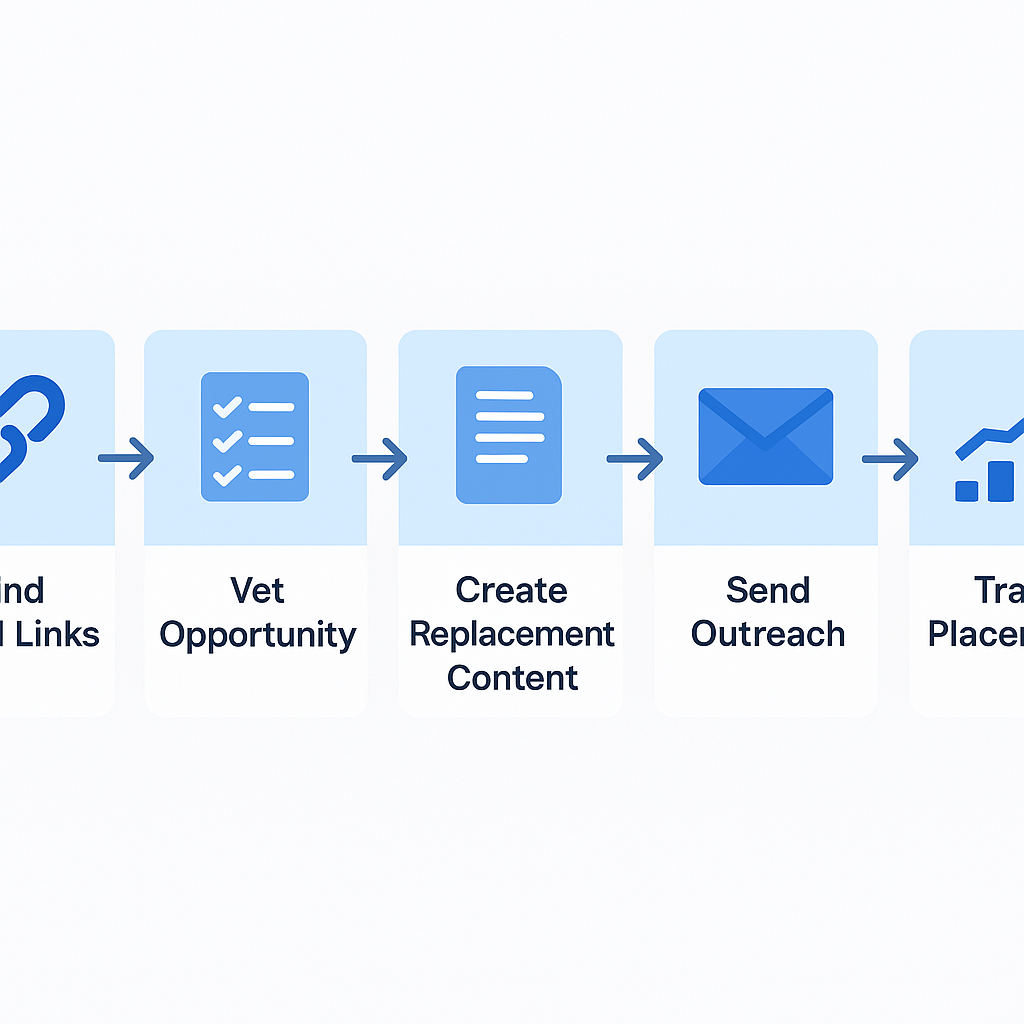
Step 1: Find Broken Link Opportunities at Scale
The fastest path to a large, qualified list of broken link opportunities is crawling the backlink profiles of pages that already rank for your target keywords. These pages attract links from publishers in your exact niche — which means their dead links are exactly the kind of replacements you want to pitch. Start with two parallel workflows: one using a competitor's backlink profile as a source of broken external links, and one using your own domain to find dead inbound links you can reclaim. Both surface high-relevance targets without requiring you to crawl the open web blindly.
Use Ahrefs Site Explorer to crawl competitor backlink profiles
Enter a top-ranking competitor's domain into Ahrefs Site Explorer. Navigate to the Outgoing Links report, then filter by 'Broken' to see every external link on their site that returns a 4xx or 5xx HTTP status. Export this list and sort by the Domain Rating (DR) of the linking page — higher DR pages are your priority targets. Then cross-reference the dead URL against the Wayback Machine to confirm what content originally lived there, so you know what replacement to build.
Use Semrush's Backlink Audit for your own dead outbound links
Run the Semrush Backlink Audit on your own domain and filter for 'Lost' links. Some of these represent pages you linked to that are now dead — fixing those improves your own site health. The more actionable output for broken link building is the list of pages on external sites that used to link to you but now return errors. Those are unlinked brand mentions with a clear reason to reach back out.
Tip: Run Google's search operator 'site:[competitor.com] inurl:resources' alongside your Ahrefs crawl. Resource pages with curated link lists are the highest-converting targets — a 2025 Siege Media study found broken link campaigns targeting resource pages achieved a 27% success rate, outperforming general outreach by 5 percentage points.
Step 2: Vet Each Opportunity Before You Write a Word
Not every broken link is worth pursuing. Before you invest time in content creation or outreach, each opportunity must pass a qualification checklist that filters for link quality, topical relevance, and page health. Skipping this step is the single biggest reason broken link building campaigns stall — teams build replacement content for links that were never going to move the needle, then conclude the tactic doesn't work.
- Domain Rating (DR) 40+: Links from lower-authority domains rarely produce measurable ranking lift
- Topical alignment: The linking page must cover a subject your site genuinely addresses
- Traffic on the linking page: Use Ahrefs' traffic estimate — pages with zero organic traffic pass zero link equity in practice
- No nofollow attribute: Check the link's HTML; nofollow links don't pass PageRank
- The dead URL's original content is recoverable via Wayback Machine so you can match or exceed it
- The site is not a link farm or PBN: Check the site's backlink profile for unnatural patterns
Quality over volume. According to 2025–2026 campaign data from SEO agencies managing 50+ campaigns, the average time investment per acquired link is 3–5 hours. That number only makes sense if each link you earn comes from a high-authority, topically relevant page. If you're sending 100 outreach emails to reach DR 20 sites in tangential niches, you're spending 300–500 hours for links that may not register in your ranking profile.
Step 3: Create or Adapt Replacement Content That Earns the Link
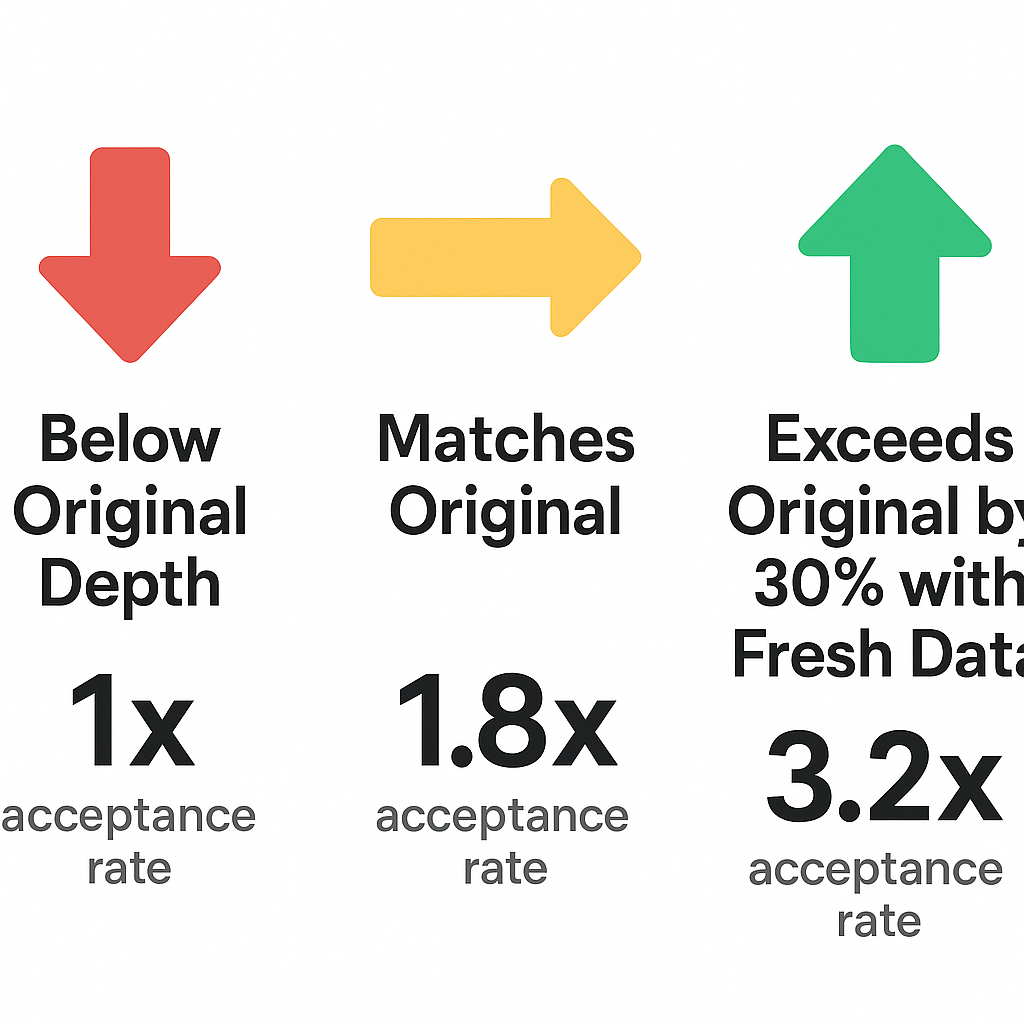
The replacement content is the actual product you're selling during outreach. Publishers will replace a dead link only if your page is a credible, live substitute for what their readers originally expected to find. This means your content must match the original resource's topic and intent — and ideally surpass it in depth, accuracy, and freshness. A 2025 Backlinko analysis of 1,000 successful broken link replacements found that pages exceeding the original in length by at least 30% and including fresh data had a 3.2 times higher acceptance rate. That multiplier is the clearest evidence that content quality is not a soft factor — it directly controls your conversion rate.
- Archive the dead URL using the Wayback Machine to understand the original content structure and depth
- Identify the primary keyword and search intent the original page served
- Write a replacement that covers every section of the original plus at least one unique angle or updated dataset
- Add schema markup (Article or HowTo) and a clear meta description — these signal editorial quality to publishers who vet links
- Include internal links to your topically related pages to give publishers context about your site's authority
- Publish and index the page before outreach — pitching an unpublished URL kills credibility instantly
Warning: Don't recycle thin content and call it a replacement. If the original dead page was a 2,000-word guide and you're pitching a 400-word product page, publishers will notice and ignore the email. Match or exceed the original's depth — the 3.2x acceptance rate applies to pages that genuinely improve on what was lost, not pages that merely exist.
Step 4: Find the Right Contact and Personalize Your Pitch
A technically correct outreach email sent to the wrong person or written generically is wasted effort. The contact you need is the person who controls the page's content — usually the author of the post, the content manager, or the site editor. Avoid contact forms and generic info@ addresses wherever possible. Tools like Hunter.io surface verified author emails from domain patterns, and LinkedIn Sales Navigator works well for B2B SaaS sites where editors have identifiable profiles.
The pitch structure that converts. Lead with the dead link and its exact location — include the page URL and the anchor text of the broken link so the publisher can verify it in 10 seconds. Then mention briefly what the dead URL used to cover (show you did your research). Finally, offer your replacement and explain in one sentence why it serves their readers. The email should be under 150 words. According to the same 2025 Search Engine Land case study tracking 200 campaigns, personalized subject lines referencing the broken URL's topic produced a 22% average success rate — roughly one placement for every five outreach attempts. Compare that to the 5–8% success rate typical of cold link outreach, and the personalization investment pays back immediately.
Subject line formula. Use a subject line that names the broken link's topic and implies a fix is ready: 'Broken link on [their page title] — I have a working replacement.' This framing positions the email as a notification, not a request. The psychological shift from 'please give me a link' to 'I found a problem you'll want to fix' is the core reason broken link building outperforms generic guest post pitches when executed correctly.
Step 5: Send, Follow Up, and Track Placements
Sending the initial pitch is the start, not the end, of the outreach cycle. Most placements come from a single, well-timed follow-up sent 5–7 business days after the first email. Beyond two follow-ups, response rates drop sharply and you risk being marked as spam — which damages your sender reputation for future campaigns. Tracking your placements requires a simple spreadsheet at minimum: record the outreach date, the target page URL, the contact email, and the status (no reply, replied, placed, declined). If you're running more than 20 prospects simultaneously, a tool like BuzzStream or Pitchbox automates follow-up scheduling and logs replies automatically.
- Day 1: Send the initial pitch email
- Day 6–7: Send one follow-up referencing the original email subject
- Day 14: Mark as 'no response' and archive — do not send a third follow-up
- When a link is placed: verify it live in your browser and log it in Search Console
- Monthly: re-check placed links to confirm they haven't been removed or nofollowed
Tip: Verify every placed link manually before closing the prospect record. Some publishers accept your pitch, update the href, but add a nofollow attribute — which means you did the work for no SEO benefit. Use the browser's 'Inspect Element' or Ahrefs' backlink checker to confirm the link is followed.
Step 6: Map Earned Links to AI Search Visibility
Most broken link building guides stop at Google rankings. As of 2026, that's only half the picture. AI search engines — ChatGPT, Claude, Perplexity, Gemini — synthesize answers from the pages they index and trust most. A link from a high-authority resource page doesn't just pass PageRank; it signals to AI crawlers that your content is worth citing in generated answers. When you earn a broken link placement on a well-regarded resource hub in your niche, you're not just improving your Google ranking position — you're increasing the probability that an AI assistant surfaces your brand when a prospect asks a question you've answered.
Tracking AI citations matters. After earning a batch of broken link placements, monitor whether those link sources correlate with increased AI search citations. Tools that score your AI visibility — including Gofylo's AI Visibility Score, which tracks how ChatGPT and Claude see your brand — make this feedback loop measurable. If a domain that links to you is one that AI engines trust as a reference source, a link from that domain compounds in value beyond traditional organic search.
Content velocity amplifies link value. Broken link building earns individual links at a pace that reflects its manual nature — typically 3–5 hours per acquired link according to 2025–2026 agency campaign data. That pace is sustainable for a focused sprint but hard to maintain as a primary growth channel. Pairing broken link building with an autonomous content engine — one that publishes 30 SEO articles a month in your brand voice, each with schema markup, internal links, and AI-optimized structure — creates a compounding flywheel. More indexed, authoritative pages on your domain means more surface area for broken link outreach, more targets for incoming links, and more pages that AI engines can cite. The 14 Backlink Building Techniques Ranked guide covers how this fits alongside other acquisition channels, and Building B2B SaaS Backlinks covers the full content-to-PR pipeline these placements feed into.
Troubleshooting
Even well-executed broken link campaigns hit friction. The four problems below account for the majority of stalled campaigns — each has a specific fix that doesn't require starting over. The key principle is that most broken link building failures are diagnostic, not strategic: the tactic itself is sound (37% of SEO experts include it in their link-building strategies, according to THM SEO Agency), but execution gaps at the prospecting or outreach stage are the common failure mode.
Low response rates. If you're seeing fewer than 10% of emails opened and near-zero replies, the problem is usually one of three things: a generic subject line that reads like mass outreach, an info@ or webmaster@ contact address that no one monitors, or a sending domain with poor deliverability. Fix the subject line first — it controls open rate. Then verify contacts via Hunter.io before sending. If deliverability is the issue, check your SPF, DKIM, and DMARC records using Google's email authentication guidance. A cold outreach email that lands in spam has a zero percent conversion rate regardless of how good the pitch is.
Publishers decline despite a good replacement. Declines that come with a reply — rather than silence — usually contain a reason. Common ones: the publisher is no longer maintaining the page, the dead link was intentionally removed (not broken by accident), or your replacement content doesn't match the original's angle. Read the reply carefully. If the page is unmaintained, archive the prospect and move on. If the angle mismatch is the issue, you may be able to revise the replacement content or identify a different page on your site that fits better.
Replacement content doesn't index. Pitching a URL that Google hasn't indexed yet is a credibility problem. Publishers who check your link before accepting it and find it not indexed will assume the page is low quality or new. Submit the URL to Google Search Console's URL Inspection tool and request indexing before starting outreach. If the page still isn't indexed after 48 hours, check for noindex tags, crawl blocks in robots.txt, or thin content flags that might be causing the delay.
Links disappear after placement. A link that exists today and is gone in 60 days is a common outcome when publishers do site redesigns, CMS migrations, or content audits. Set a calendar reminder to re-check every placed link at the 30-day and 90-day marks. If a link disappears, a short, polite email to the publisher noting that the link seems to have been removed during an update often gets it reinstated — especially if you have an existing positive relationship from the original pitch. How Backlink Automation Actually Works covers how automation tools can monitor link health at scale so you don't lose placements silently.
Frequently Asked Questions
What does a broken link mean?
A broken link is a hyperlink that points to a URL that no longer exists or returns an error — most commonly a 404 (page not found) or 410 (page permanently gone) HTTP status code. Broken links occur when the destination page is deleted, the site is restructured without proper redirects, or the external domain expires. For publishers, broken links create a poor user experience and signal outdated content. For SEOs, they represent a prospecting opportunity: find the dead URL, build a replacement, and offer it to the publisher as a working substitute.
Are backlinks still relevant in 2026?
Yes — backlinks remain one of the most durable ranking signals in 2026. Ahrefs' research consistently shows a strong correlation between the number and quality of referring domains and organic search rankings. Beyond Google, AI search engines such as ChatGPT, Claude, and Perplexity use link signals and citation patterns to assess which sources are authoritative enough to surface in generated answers. A strong backlink profile improves both traditional ranking visibility and the probability of being cited by AI assistants — which makes link acquisition more strategically valuable in 2026 than it was in prior years, not less.
What should you avoid in link building?
Avoid buying links from link farms, PBNs (private blog networks), or any service that guarantees placements in bulk — Google's spam policies explicitly flag paid link schemes as a violation that can result in manual penalties. Also avoid mass-blast outreach with no personalization, pitching irrelevant sites just because their DR is high, and reciprocal link exchanges conducted at scale. On the content side, avoid building replacement pages that are clearly thinner than the original resource — publishers can tell, and it damages your sender reputation for future outreach to the same domain.
How do I view a broken link?
The fastest way to view a broken link on any page is to use your browser's developer tools: right-click the page, select 'Inspect', navigate to the Console tab, and look for 404 errors in the network log. For systematic audits, Ahrefs' Site Audit and Semrush's Site Audit both crawl a domain and flag all broken outbound links with their HTTP status codes. For checking a single link quickly, paste the URL into a free HTTP status checker — it will return the response code immediately without requiring a full site crawl. Pew Research Center found that 38% of webpages that existed in 2013 were gone within a decade, which illustrates why manual spot-checking alone is insufficient at scale.
Broken link building earns you individual, high-quality placements — but it's a manual channel that doesn't compound on its own. Gofylo pairs link-earning content with autonomous publishing: 30 SEO-optimized articles a month, schema markup included, published directly to your CMS, and scored for AI search visibility across ChatGPT and Claude. Start your 3-day free trial at gofylo.com — no content team required.