On-page SEO services cover everything a search engine or AI assistant evaluates inside a single URL: title tags, meta descriptions, heading structure, keyword placement, internal linking, schema markup, and content relevance. As of 2026, these signals determine not just where a page ranks on Google, but whether ChatGPT, Claude, or Perplexity pull it into a cited answer. The resources below were chosen because they address the full on-page SEO surface area — not just keyword density — and because each one fits a realistic B2B SaaS workflow rather than an agency retainer.
This list is built for founders, SEO managers, and demand generation leads who already know what on-page SEO is and need to know which tools and service layers are worth their budget. A 2025 Search Engine Land analysis found that 82.5% of marketers increased their SEO budgets in 2024, and the pattern is holding in 2026 — which means the competitive bar for on-page execution is rising. The seven resources below are chosen to help you clear it without standing up a full content team.
- Gofylo — Autonomous on-page SEO content engine that publishes, optimizes, and tracks AI search citations
- Google Search Console — Free baseline for diagnosing on-page performance gaps from real search data
- Ahrefs Webmaster Tools — Free crawl-level and on-page audit layer with backlink context
- Screaming Frog SEO Spider — Deep technical on-page audit for title tags, H1s, meta descriptions, and schema
- Surfer SEO — NLP-based on-page content optimization with real-time scoring
- Google's Search Central documentation — Canonical authority on what on-page signals Google weighs
- PageSpeed Insights — Core Web Vitals and page experience diagnostics that feed on-page scoring
If you can only start with one resource: open Google Search Console first. It surfaces exactly which pages are losing clicks, which queries are close to page one, and where on-page gaps exist — all from your own live data, at no cost. Every other tool on this list works better once you have that baseline.
Gofylo — Autonomous On-Page SEO Content Engine
Gofylo is an autonomous organic growth platform that handles the full on-page SEO content loop — research, writing, internal linking, schema markup, image generation, publication, and AI citation tracking — without requiring a content team. It produces 30 SEO articles a month, each written in a few minutes, and publishes directly to WordPress, Webflow, Shopify, Ghost, Wix, Framer, Notion, and custom webhook endpoints. Every article includes FAQ schema blocks (the strongest AI-search citation signal), verified source citations, and a structured internal linking layer. The platform's Search Console refresh feature rewrites articles sitting just off page one using your live GSC data, keeping the prior version restorable — which is a meaningful structural advantage over manual content workflows. An AI Visibility Score shows how ChatGPT and Claude currently surface your brand. A free AI Search Grader tool is available for teams that want a snapshot before committing. Learn more at gofylo.io.
Best for: Growth-stage B2B SaaS companies and startups with no dedicated content team that need to scale on-page SEO content across traditional Google search and AI engines simultaneously. Also strong for solo operators and bootstrapped founders who want compounding organic traffic without managing a writer workflow. The $79/month flat pricing and 3-day free trial make it accessible at seed and Series A stages.
- Autonomous research, writing, and publishing — 30 articles/month, each live in minutes
- Schema markup, FAQ blocks, and internal links built into every article by default
- Search Console refresh: rewrites near-page-one articles using your own ranking data
- AI Visibility Score for ChatGPT and Claude, with Perplexity and Gemini being added
- Multilingual publishing in 18+ languages with AI-generated images in 5 visual styles
- Free AI Search Grader tool as a standalone starting point before subscribing
Google Search Console — Free On-Page Performance Baseline
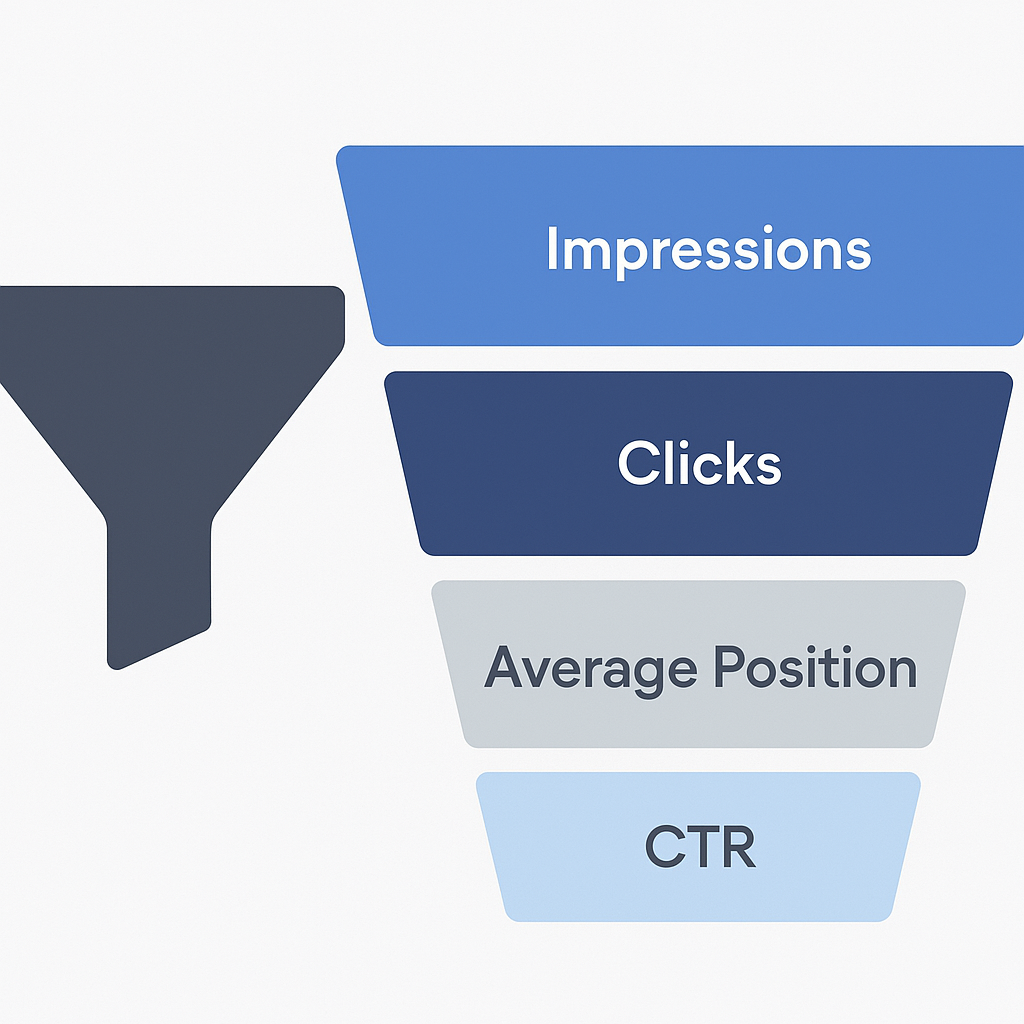
Google Search Console is a free tool from Google that shows you exactly how your pages perform in Search — impressions, clicks, average position, and the actual queries driving traffic to each URL. For on-page SEO, its most actionable view is the Performance report filtered by page: you can identify which URLs are ranking between positions 8 and 20, meaning they're close to page one but not there yet. Those are your highest-leverage on-page optimization targets. The Coverage report surfaces indexing errors that block on-page signals from reaching Google at all, and the Core Web Vitals report flags page experience problems that affect ranking. As of 2026, Search Console data also feeds into Google's Search Central guidance on how structured data and content signals are evaluated.
Best for: Every site, at every stage. Search Console is the non-negotiable baseline before spending anything on paid on-page SEO services. It tells you which pages need work, which queries are close to ranking, and whether Google can even access your content correctly. Without it, any on-page optimization is directional guessing.
Ahrefs Webmaster Tools — Free Crawl-Level On-Page Auditing
Ahrefs Webmaster Tools is a free tier of Ahrefs that gives verified site owners access to Site Audit and Site Explorer. The Site Audit crawler surfaces on-page issues across all your URLs: missing or duplicate title tags, absent H1s, missing meta descriptions, broken internal links, thin content, and schema errors. This matters because H1 tags are absent on 29% of pages, and meta descriptions are missing on roughly 32% of all pages analyzed — a finding consistent with crawl data across millions of sites. Ahrefs Webmaster Tools lets you find exactly which of your pages fall into those gaps without a paid subscription. The backlink data in Site Explorer adds context that pure on-page tools miss: if a page has strong links but weak on-page signals, that's a clear optimization priority.
Best for: SEO managers and content leads who want a structured on-page audit without paying for a full Ahrefs subscription. The free tier is generous enough to run a complete site audit for most SaaS sites under 10,000 pages and surface the specific on-page fixes that will move rankings. Pairs well with Google Search Console data to build a prioritized fix list.
Screaming Frog SEO Spider — Technical On-Page Audit at Scale
Screaming Frog SEO Spider is a desktop crawler that audits on-page elements across every URL it touches: title tag length and duplication, meta description presence and character count, H1 and H2 structure, canonical tags, hreflang, structured data, image alt text, and page response codes. The free version crawls up to 500 URLs; the paid license (roughly $259/year) removes that limit. For on-page SEO specifically, Screaming Frog is the most granular tool on this list — it exports every element into a spreadsheet you can filter, sort, and prioritize. Title tags are present on 98.6% of pages, but presence alone does not mean optimization: Screaming Frog shows you exactly which tags are too long, too short, duplicated, or missing the target keyword. Title tags between 40 and 60 characters tend to get about 8.9% higher CTR than other lengths, according to Backlinko — and Screaming Frog lets you filter your entire site for tags outside that range in seconds.
Best for: SEO managers running a one-time on-page audit before a site migration, product launch, or quarterly content review. Also essential for agencies managing multiple client sites or enterprise teams with large URL counts. Not a continuous monitoring tool — think of it as the diagnostic layer you run before deploying fixes, not the ongoing tracker you check weekly.
Surfer SEO — NLP On-Page Optimization Inside the Editor
Surfer SEO analyzes the top-ranking pages for a given keyword and generates a real-time content score based on word count, NLP keyword coverage, heading structure, and entity use. Writers or editors paste their draft into the Surfer editor and see a live score update as they add or adjust content. The Content Editor also suggests related terms and questions that the top-ranking pages cover, which directly feeds the topical completeness that both Google and AI assistants reward. According to SEOClarity, 52% of SEO professionals saw improved performance from using AI in on-page SEO — Surfer's scoring model is one of the clearest practical examples of that workflow in action. Surfer is not an autonomous platform — a human still needs to interpret the score and revise the content — but it gives writers a measurable on-page target rather than a gut feeling.
Best for: Content teams and SEO managers who write manually and want a real-time NLP guide to optimize each article as it is written. Surfer works well as the on-page optimization layer inside a human-led content process. If you are looking for an autonomous system that applies similar optimization logic without requiring a writer to sit in an editor, that gap is where a platform like Gofylo operates.
Google Search Central — Canonical On-Page SEO Documentation
Google's Search Central documentation is the primary source of truth for how Google evaluates on-page signals. It covers title link best practices, meta description guidance, structured data types and requirements, image SEO, internal linking, and Core Web Vitals expectations — all with implementation examples. In 2026, the structured data section is particularly relevant: structured data and schema markup delivered a positive SEO impact for 21.8% of professionals, outperforming backlink acquisition at 16.4%. The Search Central documentation explains exactly which schema types Google supports and how to implement them without triggering a manual action. For any team auditing their on-page SEO approach or evaluating whether a service provider's deliverables match what Google actually rewards, this documentation is the reference layer everything else should be checked against.
Best for: Technical founders, engineering leads, and SEO managers who want to validate that their on-page SEO implementation — or a vendor's implementation — matches Google's stated guidelines. Free, authoritative, and updated when Google's systems change. Building Your B2B SEO Strategy requires understanding what Google's documentation actually says about on-page signals before deciding which services or tools to layer on top.
PageSpeed Insights — Core Web Vitals and Page Experience Diagnostics
PageSpeed Insights is a free Google tool that scores a page's Core Web Vitals — Largest Contentful Paint, Interaction to Next Paint, and Cumulative Layout Shift — using both lab data and real-world field data from the Chrome User Experience Report. These metrics are confirmed on-page ranking signals, and in 2026, they also affect whether AI assistants treat a page as a credible, citable source. A page that loads slowly, shifts layout on mobile, or blocks interactivity scores poorly not just on Google but on the page experience signals that AI crawlers implicitly weight when deciding which sources to surface. PageSpeed Insights gives you a URL-level score, a prioritized list of fixes, and specific diagnostics — image compression, render-blocking resources, server response times — that a developer can act on directly. According to Ahrefs research on on-page optimization practices, page experience signals are increasingly bundled with content relevance signals in how Google evaluates overall page quality.
Best for: Development and technical ops leads who own site performance, plus SEO managers who need to flag page experience problems to engineering with specific data rather than vague complaints. Run PageSpeed Insights on your highest-traffic and highest-priority conversion pages first — then work outward. Free, requires no account, and the results are immediately actionable.
What On-Page SEO Services Actually Include in 2026
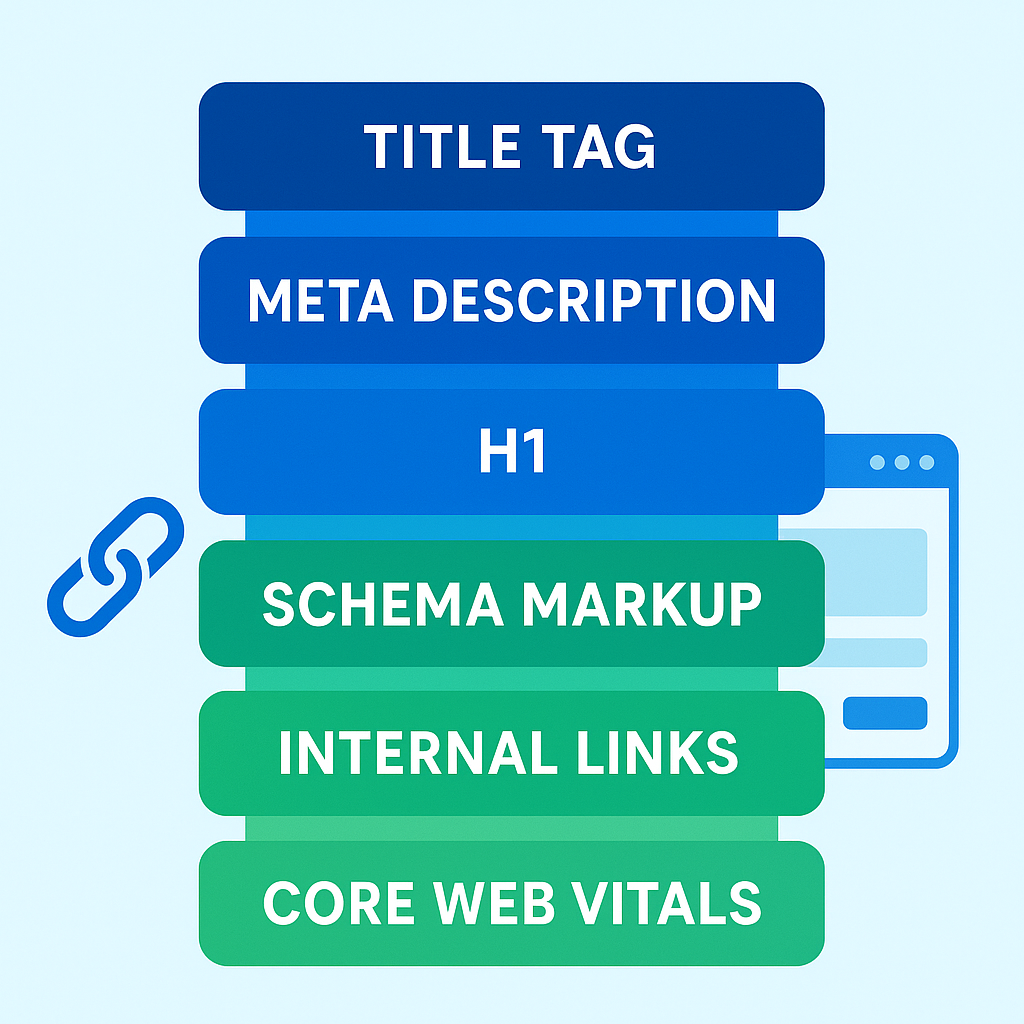
On-page SEO services is a broad term, and providers define it differently. At minimum, a credible on-page SEO service should cover: keyword mapping to individual URLs, title tag and meta description optimization, heading structure (H1 through H3), body content optimization for topical relevance and search intent, internal linking strategy, schema markup implementation, image alt text, and a content gap analysis against competing pages. What Separates Enterprise SEO from standard on-page work is largely the scale and governance layer — but the element checklist is similar whether you are a 10-person SaaS startup or a 500-person company.
On-Page vs. Off-Page vs. Technical SEO: Where Each Fits
On-page SEO covers signals inside a URL — content, tags, structure, and schema. Off-page SEO covers signals that happen elsewhere — backlinks, brand mentions, and third-party citations. Technical SEO covers the crawlability, indexability, and server-level infrastructure that determines whether on-page signals can reach Google at all. A useful frame: technical SEO earns you a seat at the table, on-page SEO determines how competitive your seat is, and off-page SEO is the social proof that moves you up the rankings ladder. For a deeper look at the off-page layer and how backlinks compound with on-page work, the article on 9 SEO Services for Startups Ranked by Compounding Impact covers that territory. For affordable entry points into the full service stack, the article 9 Affordable SEO Services Ranked by ROI for Startups in 2026 is the practical companion. All three layers matter, and most teams under-invest in on-page because the work is less visible than a link-building campaign — but the compounding effect is comparable.
How On-Page Signals Feed AI Search Citations
In 2026, AI engines — ChatGPT, Claude, Perplexity, Gemini — do not just scrape Google's top results. They evaluate page structure, factual density, citation quality, and schema markup when deciding which sources to surface and attribute in a generated answer. An on-page SEO approach that was Google-only in 2024 is now incomplete: pages need FAQ schema, verified external citations, clear declarative sentences, and topic structure that a language model can extract cleanly. Internal linking strategy delivered a measurable positive SEO impact for 22.9% of professionals in 2025, and that same structure helps AI crawlers understand topical relationships between pages. The resources on this list that address schema, FAQ blocks, and structured content — Gofylo, Search Central, and Screaming Frog — are directly relevant to the AI citation layer, not just the Google ranking layer. If you want to understand the broader AI visibility picture, Gofylo's ai writing services article explores how content format affects citation eligibility across AI engines.
On-page SEO in 2026 is dual-channel by default. Optimizing a page for Google without structuring it for AI citation is leaving half the potential traffic surface uncovered. Schema markup, FAQ blocks, and source-linked factual claims are on-page decisions — not separate workflows.
The most effective on-page SEO strategies in practice combine intent-aligned content, technically clean markup, and a publishing cadence that builds topical authority over time. According to data compiled by foursets.com, the most effective SEO strategies as reported by practitioners in 2025 were: optimizing for search intent (21%), on-page content with keywords (20%), keyword research (20%), mobile optimization (19%), and AI for SEO improvement (19%). The concentration of those percentages in on-page and content-adjacent tactics is not a coincidence — it reflects where the measurable signal density is highest. U.S. businesses spend approximately $119.4 billion annually on SEO and digital marketing consulting, and a meaningful share of that is on-page work that could be systematized rather than re-executed manually each month. Additionally, retailers that optimize meta titles and product descriptions see a 32% increase in organic sales, according to BigCommerce's internal data — a finding that extends naturally to SaaS landing pages and solution pages where on-page copy is the primary conversion lever.
On-page signals account for 19% of weighting for Local Pack rankings, according to Moz's Local Search Ranking Factors analysis — making on-page work relevant even for SaaS companies with a geographic sales focus or regional go-to-market motion. If your ICP is concentrated in specific metro areas, on-page SEO and local SEO overlap more than most teams realize.
One structural difference between manual and autonomous on-page SEO workflows: manual processes require a human to initiate every optimization cycle — a writer writes, an editor reviews, an SEO lead checks the score, a developer implements schema. Each step is a handoff where work stalls. Autonomous platforms like Gofylo compress those handoffs into a single loop: the system researches, writes with NLP optimization and internal linking built in, adds FAQ schema and verified citations, generates images, and publishes to the CMS directly. The human decision point is strategy — which topics to cover, which cluster to build — not execution of every individual article. At 30 articles a month across 18+ languages, the compounding effect of that output velocity is structurally different from a two-article-per-week manual cadence.
Frequently Asked Questions
How much does on-page SEO cost?
On-page SEO costs range from free (Google Search Console, Ahrefs Webmaster Tools, PageSpeed Insights) to a few hundred dollars per month for tools like Surfer SEO, to $79/month for an autonomous content and optimization platform like Gofylo, to $2,000–$10,000+ per month for a full-service agency retainer. The right cost depends on whether you are buying a tool that helps your team execute, or a service that executes on your behalf. Agency retainers typically include dedicated account management, monthly reporting, and human writers — but they do not scale output the way an autonomous platform does. Most B2B SaaS startups with small teams get the best return from a combination of free diagnostic tools (Search Console, Ahrefs Webmaster Tools) and an autonomous publishing platform that handles ongoing content production.
Is SEO still worth it in 2026?
Yes — and the argument is stronger in 2026 than it was two years ago, because organic traffic now includes both Google rankings and AI engine citations. A page that ranks on Google and gets cited by ChatGPT or Claude gets traffic from two channels with a single piece of content. The detailed case for why SEO remains a compounding growth channel — including how AI search changes the calculus — is covered in the Gofylo article 'What an SEO Agent Actually Does — And Why It Matters in 2026.' The short version: paid traffic stops when the budget stops; SEO-driven and AI-cited content compounds.
Which tool is best for on-page SEO?
The best single tool depends on your current gap. If you have no performance baseline, start with Google Search Console — it is free and tells you exactly which pages need on-page work. If you need a content-level score while writing, Surfer SEO gives you real-time NLP feedback. If you need a technical crawl of your full site, Screaming Frog or Ahrefs Webmaster Tools will surface every missing title tag, absent H1, and broken internal link. If you need ongoing on-page content production at scale — not just optimization of existing pages but creation of new optimized pages every month — Gofylo handles that loop autonomously. Most teams eventually layer multiple tools: diagnostics from Search Console and Ahrefs, execution from an autonomous platform.
What is on-page SEO vs off page SEO?
On-page SEO refers to all the optimization signals that exist within a URL you control — title tags, meta descriptions, heading structure, body content, internal links, schema markup, image alt text, and page experience metrics like Core Web Vitals. Off-page SEO refers to signals that originate outside your site — primarily backlinks from other domains, but also brand mentions, social signals, and third-party citations. In 2026, both matter for Google rankings, and both affect AI engine citations: on-page structure determines whether an AI model can extract and attribute a page's content cleanly, while off-page authority determines how much trust weight that content carries. On-page and off-page SEO are complementary, not competing — strong on-page work makes off-page link equity more effective, and strong off-page authority amplifies the ranking impact of on-page improvements.
Ready to close the on-page SEO gap without building a content team? Gofylo researches, writes, and publishes 30 optimized articles a month to your CMS — with schema markup, internal links, FAQ blocks, and AI citation formatting built into every piece. The AI Visibility Score shows you how ChatGPT and Claude currently surface your brand, and the Search Console refresh rewrites your near-page-one articles automatically. Start a 3-day free trial at gofylo.io — no credit card required, cancel anytime.
Sources
- Discover the most relevant SEO statistics for 2025, from ranking factors to mobile usage and zero-click search trends—vital data for marketers and SEOs - seosherpa.com
- 300+ SEO Statistics and Facts in 2026 Powered by Experts - searchatlas.com
- 300+ SEO Statistics for 2026: Fresh, Verified Facts & Trends - foursets.com