Profound is one of the best-known AI visibility platforms. Its pricing is the first thing most founders and SEO leads check once they decide they need to know how ChatGPT, Claude, Perplexity and Gemini describe their brand. The decision is harder than reading a pricing page. A Profound subscription mainly buys measurement: prompt tracking, citation data and share-of-voice reporting across AI engines. It now adds an AI Marketer layer for creating and optimizing pages. Whether that is the right spend depends on what your team does once the data arrives.
In this comparison I put Profound next to four alternatives a B2B SaaS team realistically weighs it against: Writesonic, Semrush, Clearscope and Gofylo. Gofylo is my own product, and I describe it on the same terms as the others. I compare them on the axes that decide the purchase: how the pricing is structured, what the money buys, which AI engines are covered, whether content gets produced and published, and which team size each one fits. Both lenses run through every section. Traditional Google SEO still drives most organic pipeline in 2026, and AI search citations are the second channel most teams are trying to add.
Quick verdict: Profound fits mid-market and enterprise brands with an analyst or agency who will act on detailed AI visibility data. Semrush fits teams that already pay for it and want AI metrics inside a familiar suite. Clearscope fits writers optimizing pages they draft themselves. Writesonic fits teams that want AI writing plus GEO tooling and will drive it manually. Gofylo (my product) fits founder-led and small teams that need articles researched, written and published every month without a content hire.

Profound and Its Rivals at a Glance
The five options split into two groups. Profound, Semrush and Clearscope mostly measure or guide work that a person still does. Writesonic and Gofylo produce content, with Gofylo publishing it without manual prompting. Profound sits at the deep end of measurement, and its newer AI Marketer pushes it toward execution.
| Option | Pricing model | Primary job | AI engine scope | Content production | Best fit |
|---|---|---|---|---|---|
| Profound | Tiered self-serve plans plus custom enterprise contracts | AI visibility analytics and an AI Marketer | Broad: ChatGPT, Perplexity, Claude, Gemini, Copilot, AI Overviews and more | AI Marketer creates and optimizes pages | Mid-market, enterprise, agencies |
| Writesonic | Tiered subscriptions by usage and seats | AI writing plus GEO tracking | Multiple AI engines on GEO plans | Drafts on request, user-driven | Teams that write with AI assistance |
| Semrush | Suite subscription with AI add-on toolkit | All-in-one SEO with AI visibility metrics | Major AI assistants via its AI toolkit | Writing assistant, not autonomous | Teams already on Semrush |
| Clearscope | Tiered plans by content reports and seats | Content optimization grading | Limited AI tracking focus | Guides human writers | Editorial teams with writers |
| Gofylo (my product) | Single plan, $79/month, 3-day free trial | Autonomous content engine plus AI visibility score | Scores ChatGPT and Claude | 30 articles a month, published to your CMS | Founder-led and small teams |
I have kept specific Profound tier prices out of the table on purpose. Profound adjusts plan names, prompt allowances and engine access as it ships features, and the only reliable figure is the one on its own pricing page on the day you check. The structure has been stable: a self-serve entry tier with a limited number of tracked prompts and engines, higher tiers that add prompts, engines and seats, and an Enterprise contract priced through sales.
How Each Platform Structures Its Pricing
Profound prices on tracking capacity: how many prompts it runs, against how many AI engines, for how many seats and brands. That model rewards companies with a large prompt universe and a reason to monitor it closely. A small team can end up paying for capacity it never uses.
Profound The self-serve tiers meter prompts and engines, so your bill grows with the number of questions you want answered. Enterprise adds custom prompt volumes, more engines, agency or multi-brand setups, and access to deeper datasets such as prompt volume estimates. The FAQ on Profound's pricing page covers what happens when you exceed a prompt limit and whether a trial or Enterprise is the right starting point. That tells you the pricing is built around consumption. Plan your prompt list before you pick a tier, because the prompt count drives the price.
Writesonic Writesonic prices across tiers that bundle AI writing credits, seats and, on its GEO-focused plans, AI visibility tracking. The cost scales with how much content you generate and how much monitoring you add. It suits teams that want one vendor for drafting and tracking and accept that a person still runs the drafting.
Semrush Semrush keeps its core SEO suite on tiered subscriptions and sells AI visibility features as an add-on toolkit. If you already pay for Semrush for keyword research, rank tracking and audits, the marginal cost of AI metrics is the add-on alone. That is the cheapest path for existing users and the most expensive for anyone who only wants AI tracking.
Clearscope Clearscope prices around content reports and seats. You pay for the ability to grade and optimize a set number of drafts. The model fits editorial teams with steady writer output, and it adds little if nobody on the team writes.
Gofylo Gofylo, my product, has one all-in-one plan at $79/month with a 3-day free trial and cancellation at any time. That plan includes 30 published articles a month, the Search Console refresh, the AI Visibility Score and publishing to your CMS. There is no prompt metering and no add-on to unlock the core workflow. The free AI Search Grader is a standalone entry point if you want a read on your AI visibility before starting a trial.
What the Subscription Actually Buys
The core question behind Profound pricing is what you get per dollar: data or output. Profound mainly buys data about how AI engines answer questions in your category, with the AI Marketer layered on top. A content engine buys published pages. Most teams need both, and the budget split decides which tool comes first.
Profound You get Answer Engine Insights (how often and how favorably your brand appears in AI answers), citation analysis showing which domains and URLs AI engines lean on, competitor share of voice, prompt volume data on higher tiers, and agent analytics that show AI crawler activity on your site. The AI Marketer, which Profound positions as creating, optimizing and influencing the pages behind AI answers, extends that into content and social calendars. For a brand with an in-house SEO analyst, this dataset can steer a quarter of work.
Writesonic You get an AI writer, SEO tooling and GEO monitoring in one account. The writing is prompt-driven: a person chooses topics, runs the generation, edits and publishes. The tracking tells you whether that output is showing up in AI answers.
Semrush You get the broadest classic SEO dataset of the five, with AI visibility metrics added through the AI toolkit. Semrush's own AI Overviews research is a useful example of the kind of analysis the suite supports. The suite tells you what to do. Your team still has to do it.
Clearscope You get term and topic guidance that helps a writer cover a subject fully, which supports both Google rankings and the extractable answers AI engines tend to quote. You do not get articles or broad AI citation tracking.
Gofylo You get finished articles. Gofylo researches keywords from your competitors and live search results, groups them into topic clusters, and writes each article in a few minutes in your brand voice. Each article has schema markup, internal links, FAQ blocks, verified source citations and AI-generated images in 5 styles, in 18+ languages. The Search Console refresh rewrites published articles that sit just off page one and keeps the earlier version so you can restore it. The AI Visibility Score shows how ChatGPT and Claude see your brand. The measurement is lighter than Profound's. The output is the main product.
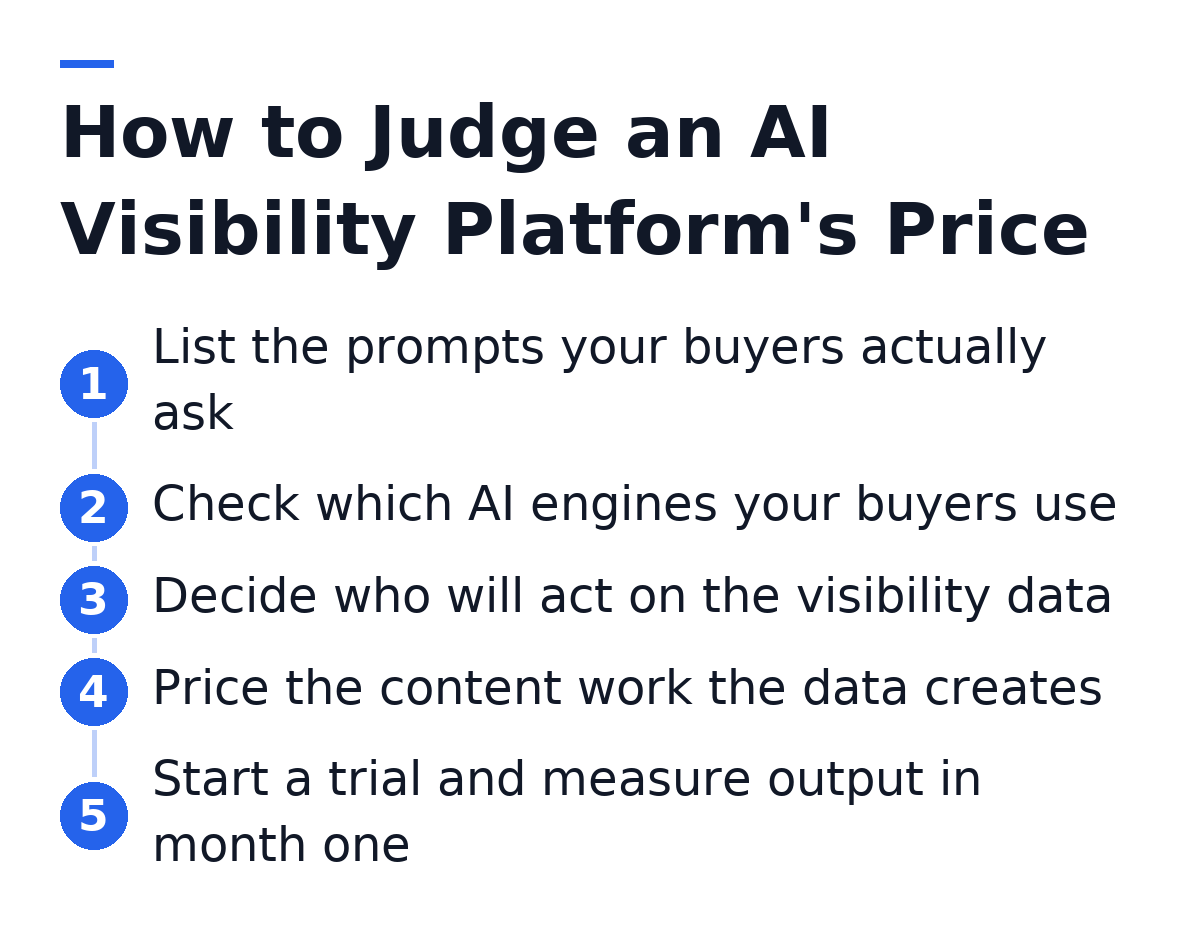
The cost that rarely appears on a pricing page is the work after the dashboard. A visibility platform that shows you are missing from fifty high-intent prompts is only worth its price if someone writes and publishes the pages that close those gaps.
AI Engine Coverage and Google Overlap
Profound has the widest engine coverage of the five, including ChatGPT, Perplexity, Claude, Gemini, Microsoft Copilot, DeepSeek and Google AI Overviews, with access varying by tier. Breadth matters most to brands whose buyers are spread across assistants. For many B2B SaaS teams, a smaller set of engines plus strong Google rankings covers most of the demand.
Google and AI search overlap more than vendor messaging suggests. Google's own documentation on AI features says, "There are no additional requirements to appear in AI Overviews or AI Mode, nor other special optimizations necessary." The quote comes from Google Search Central's guidance on AI features. In practice, pages that are crawlable, well structured and genuinely useful earn both blue-link rankings and AI citations. A tool's engine list matters less than whether pages exist for those engines to cite.
Profound Broadest monitoring. It is the right choice if you need to report to leadership on AI share of voice per engine, or if you are an agency comparing client brands across assistants. Its agent analytics also show which AI crawlers visit your site, which is useful when you are weighing measures like an llms.txt file (the section on what llms.txt actually does covers that decision in more depth).
Writesonic Monitors several AI engines on its GEO plans, enough for most mid-sized teams to see trends, and pairs that with Google-oriented SEO features.
Semrush Strongest on the Google side, with AI assistant visibility added through the toolkit. Good for teams that want one place for rank tracking and AI mentions.
Clearscope Focused on on-page content quality, which helps on Google and in AI answers, without broad per-engine tracking.
Gofylo The AI Visibility Score covers ChatGPT and Claude, with Perplexity and Gemini to be added later. Every article is formatted so AI assistants can extract and cite it, and the same structure (schema, FAQ blocks, clear headings) serves Google. If you track moving from rankings to LLM mentions as one funnel rather than two, that dual format is the point.
Who Writes and Publishes the Content
This axis separates the options most clearly. Profound's AI Marketer now creates and optimizes content, Writesonic and Clearscope help a human produce it, Semrush assists, and Gofylo runs the full loop from research to publication without prompts. For a team without writers, this axis usually decides the purchase.
Manual and autonomous workflows grow differently over time. In a manual workflow, output depends on the hours someone has that week, so the content library grows in bursts and stalls. In an autonomous workflow, AI agents research, write, optimize, add internal links, publish and later refresh articles on a fixed cadence. The library grows every month whether or not anyone had time. Older articles keep collecting impressions while new ones add coverage, so traffic accumulates. A larger library also gives AI engines more pages from your domain to cite.
Profound The AI Marketer fills content and social calendars and optimizes the pages behind AI answers. Higher tiers and Enterprise are where most teams get the full version. Profound's strength is that the content work is informed directly by its visibility dataset. Check on a trial how much review and publishing effort stays with your team.
Writesonic Produces drafts quickly once a person defines the brief. Publishing integrations exist, but a human decides what to write and when. It works well for a marketer who enjoys steering the output.
Semrush Its writing tools help draft and optimize, and the suite's strength is telling you which topics matter. Production stays with your team or an agency.
Clearscope Built for writers. It raises the quality ceiling of each draft, and you supply the drafts.
Gofylo Writes and publishes 30 articles a month directly to WordPress, WordPress.com, Webflow, Shopify, Wix, Notion, Ghost or Framer, with a webhook for custom setups. Topic selection comes from competitor and live search research, so there is no prompt queue to manage. If you want to see the measurement-versus-execution trade-off argued in more depth, Profound AI vs. Autonomous GEO walks through it point by point.
Team Size, Setup Effort and Fit
Profound is built for teams with someone whose job includes AI visibility: an SEO manager, an analyst or an agency. Lean teams can use it, but the price-to-value ratio improves with headcount that can act on the data. Gofylo and Writesonic suit smaller teams, Semrush suits existing customers of any size, and Clearscope suits editorial teams.
Profound Setup means defining prompts, competitors and topics, then waiting for enough runs to show trends. Enterprise customers get onboarding support. The setup pays off for brands like those Profound lists among its customers, which are mostly well-known companies with dedicated marketing functions. A two-person startup can still learn from it, though the bill may arrive before the team has capacity to use the insight.
Writesonic Fast to start, with the learning curve in writing good briefs. It fits a marketing lead who wants a hands-on AI writing workspace.
Semrush Zero setup for existing users. New users face a large suite with many tools they may not need for AI visibility alone.
Clearscope Light setup and intuitive grading, but its value depends on having writers on staff or under contract.
Gofylo Setup is connecting your CMS and Search Console and defining your brand voice and competitors. After that the engine runs on its own. It is built for founder-led companies, solo operators and small marketing teams that want autonomous execution instead of another tool that needs daily prompting. Teams that outgrow it on measurement often pair it with a dedicated tracker. The overview in Your Guide to LLM visibility tools covers how those combinations work.
Verdict: Which Option Earns Its Price
Profound earns its price when visibility data is the bottleneck and you have people ready to act on it. When content output is the bottleneck, a content engine earns more per dollar. Most B2B SaaS startups I work with are limited by output first, and they add deep measurement once the library is large enough to measure.
- Choose Profound if you are a mid-market or enterprise brand, or an agency, that needs per-engine AI share of voice, citation source analysis and prompt volume data, and you have an analyst or content team to execute on it.
- Choose Writesonic if you want AI writing and GEO tracking under one login and a marketer on your team is happy to brief and steer each piece.
- Choose Semrush if you already pay for the suite and want AI visibility metrics next to your rank tracking without adding a vendor.
- Choose Clearscope if you have writers producing steady drafts and want each page to cover its topic thoroughly for Google and AI answers.
- Choose Gofylo (my product) if you are founder-led or run a small team and need 30 researched, cited, schema-marked articles a month published to your CMS, with ChatGPT and Claude visibility scored, at a single $79/month price.
Verdict: Profound wins for enterprises and agencies that buy AI visibility intelligence and staff the work behind it. Semrush wins for existing suite users. Clearscope wins for editorial teams with writers. Writesonic wins for hands-on AI-assisted writing. Gofylo wins for small teams whose real constraint is publishing enough good content to rank on Google and get cited by AI assistants.
Frequently Asked Questions
How much does Profound cost?
Profound uses tiered pricing: a self-serve entry plan metered by prompts and engines, higher self-serve tiers with more capacity and seats, and custom-priced Enterprise contracts arranged through sales. Exact figures change as Profound updates plans, so check its pricing page directly. Budget based on how many prompts you need to track and how many AI engines your buyers use, because those two variables drive the bill more than anything else.
Is Profound AI worth it?
Profound is worth it for brands that will act on detailed AI visibility data, typically companies with an SEO lead, an analyst or an agency, and for agencies managing several brands. It is harder to justify for a small startup with no one to produce the content its insights call for. In that case, spend first on publishing well-structured articles that can rank and be cited, then add a dedicated tracker once there is a library worth measuring.
If output is your bottleneck, try the engine before you buy more dashboards. Start a 3-day free trial of Gofylo, connect your CMS, and see your first articles researched, written and published in your brand voice. If you want a baseline first, run the free AI Search Grader to see how AI assistants describe your brand.